REYES PATIENT EDUCATION · 003
Dentures.
Designed around you.
Explore how removable dentures replace missing teeth, how they are planned, and what helps them work well over time.
Educational information · Not patient-specific
Explore the story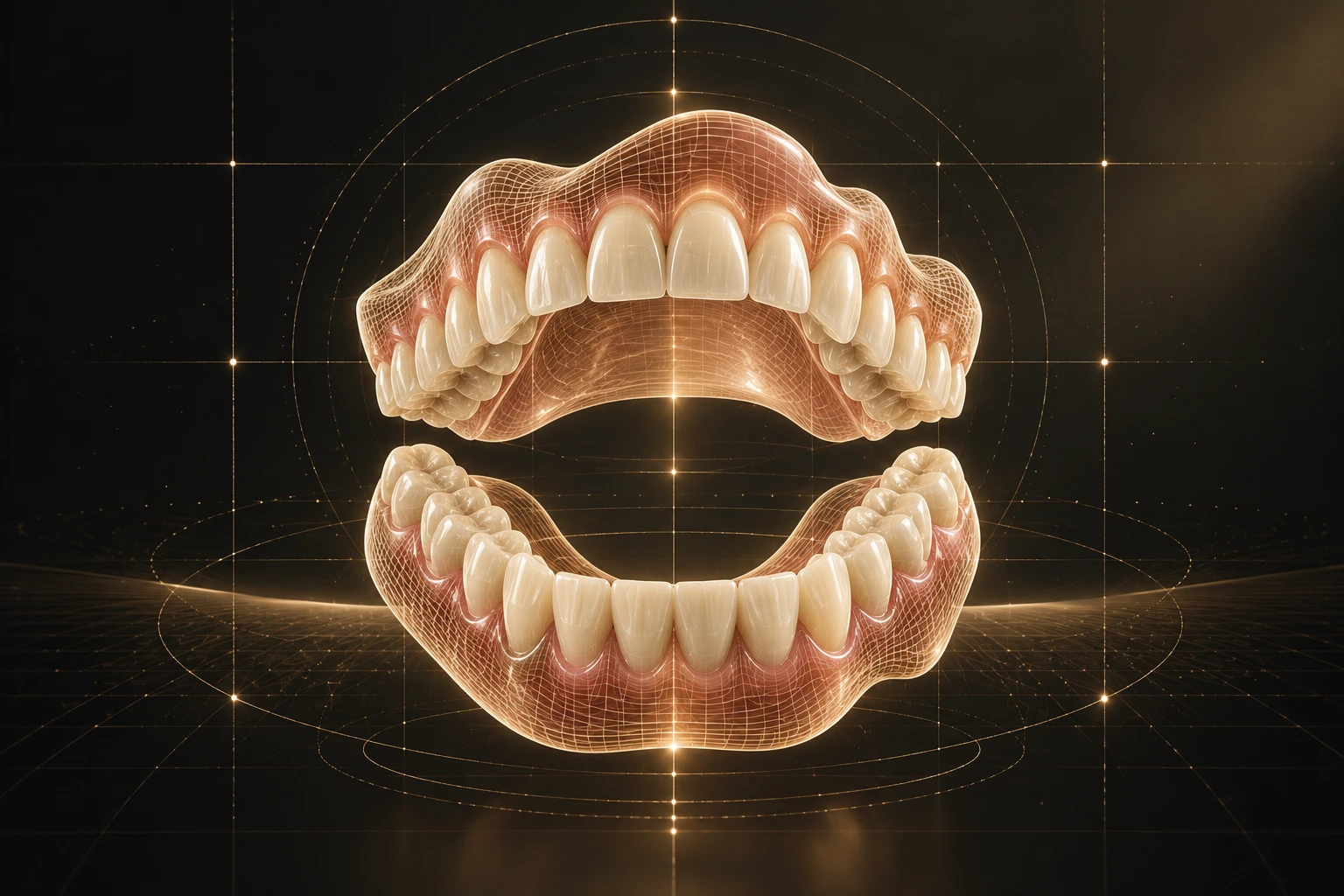 A NEW CHAPTER. THOUGHTFULLY DESIGNED.
Six carefully rendered studies, with closer views and clear explanations. The gold lattice is a visual motif—not denture material. These illustrations are conceptual, not patient-specific anatomy or a prescribed treatment sequence.
01 / UNDERSTANDING YOUR OPTIONS
Different designs.
Different foundations.
The right design starts with what is missing.
A complete denture replaces all teeth in an upper or lower arch. A partial denture replaces selected missing teeth alongside natural teeth. An implant-retained removable denture uses attachments for retention and is taken out for cleaning.
The rendering shows complete dentures only. Partial and implant-retained designs are discussed below. A fixed implant bridge is a different option—not something you remove at home.
Complete+
Complete denture · A removable arch of replacement teeth supported by a fitted base over the tissues.
Partial+
Partial denture · Replacement teeth work alongside remaining natural teeth. The design depends on their condition and position.
Implant-retained+
Implant-retained removable denture · Attachments help retain the denture. The number and arrangement of implants depend on your individual plan.
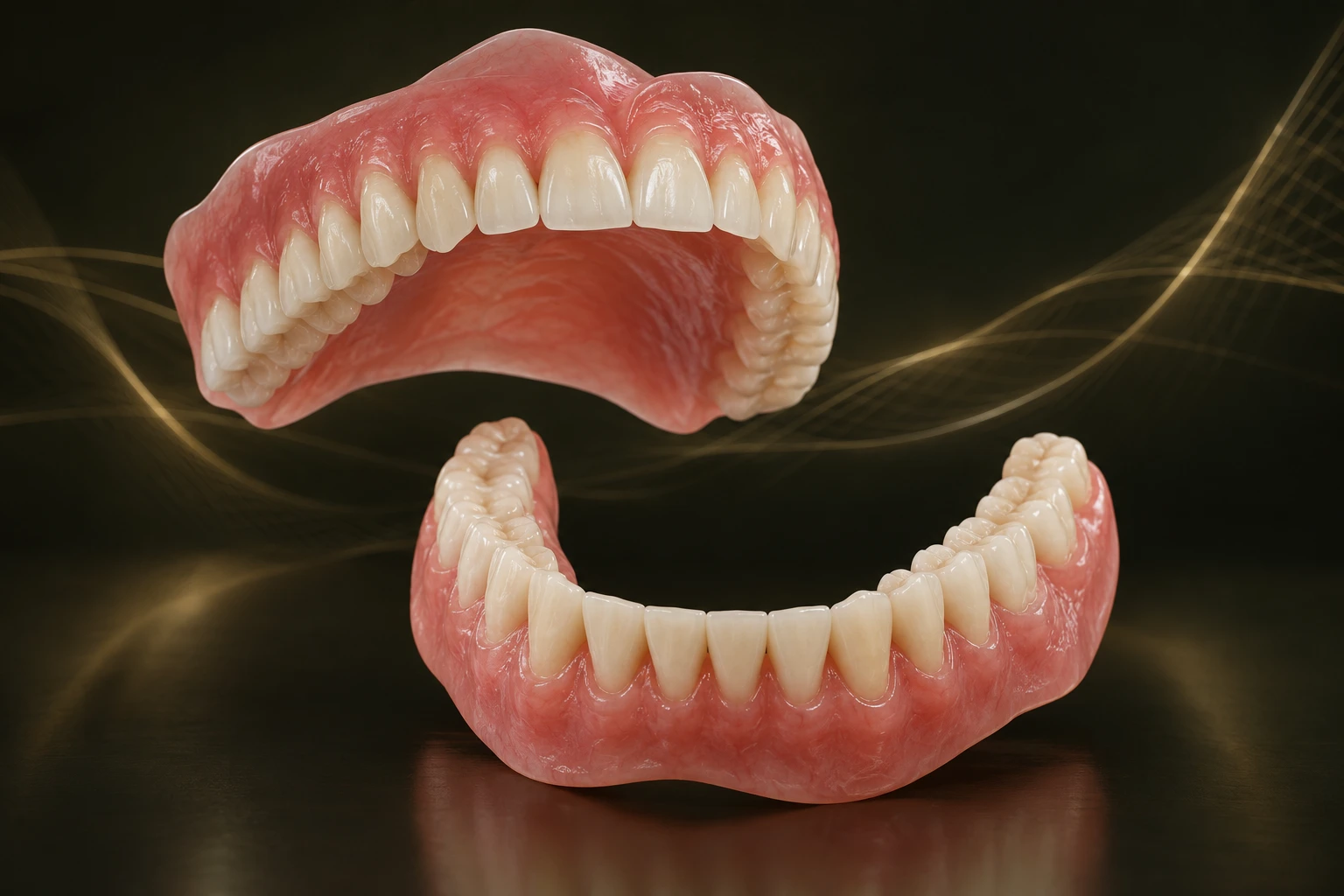
Complete upper and lower dentures. The upper base covers the palate; the lower base leaves space for the tongue. Other designs are described in the guide.
02 / THE FOUNDATION
A conversation
before a design.
Your mouth. Your goals. Your plan.
Your dentist evaluates your mouth and discusses your goals, remaining teeth, supporting tissues and available options. Preferences, expected maintenance and cost also help shape the decision.
A denture is one option—not the same recommendation for everyone. The paired illustration explains tissue support; it is not an assessment of your mouth or a precise fit comparison.
Remaining teeth+
Remaining teeth · Their condition and position help inform which designs may be considered.
Supporting tissues+
Supporting tissues · The shape and health of the gums and supporting structures influence the plan.
Personal goals+
Personal goals · Discuss appearance, function, comfort, maintenance and what matters to you.
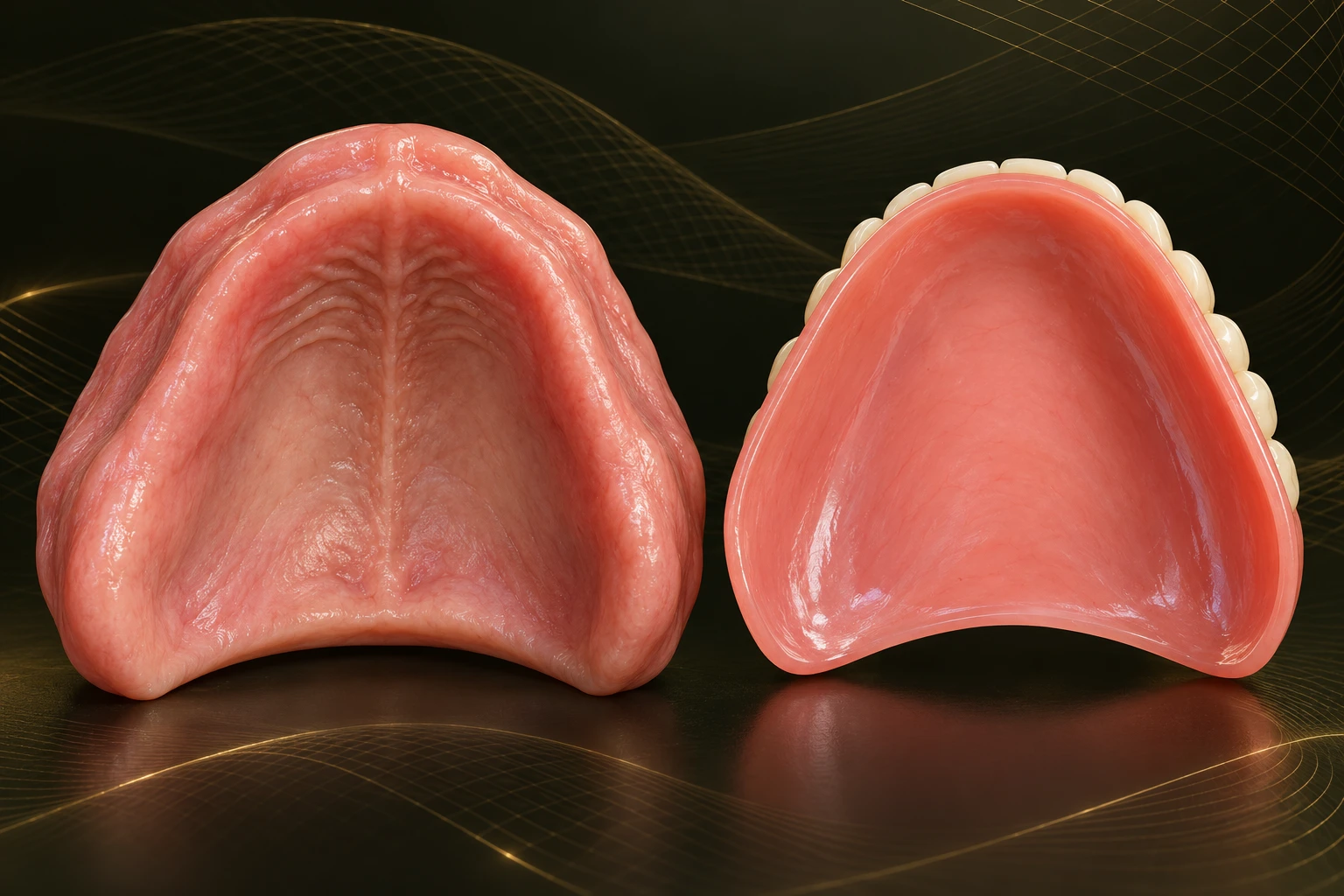
Left: an upper arch without teeth. Right: the tissue-facing surface of an upper complete denture. The base is planned around the supporting tissues.
03 / FROM RECORDS TO A TRIAL SMILE
Details become
a plan you can discuss.
A considered sequence, not a fixed formula.
Impressions or a scan record the shape of your mouth. Bite records help establish how the jaws meet. A trial stage may allow you and your dentist to review the tooth arrangement before completion.
Some stages may be repeated or combined. Immediate dentures and implant treatment can follow different sequences. No appointment count or timeline is implied.
Records+
Records · Impressions or scans capture the shape needed for planning and fabrication.
Bite+
Bite · Records help relate the upper and lower jaws and guide the arrangement.
Trial evaluation+
Trial evaluation · The planned teeth may be checked for appearance, speech and bite before completion.
Finished denture+
Finished denture · The completed appliance is fitted and reviewed; ongoing adjustments may still be needed.
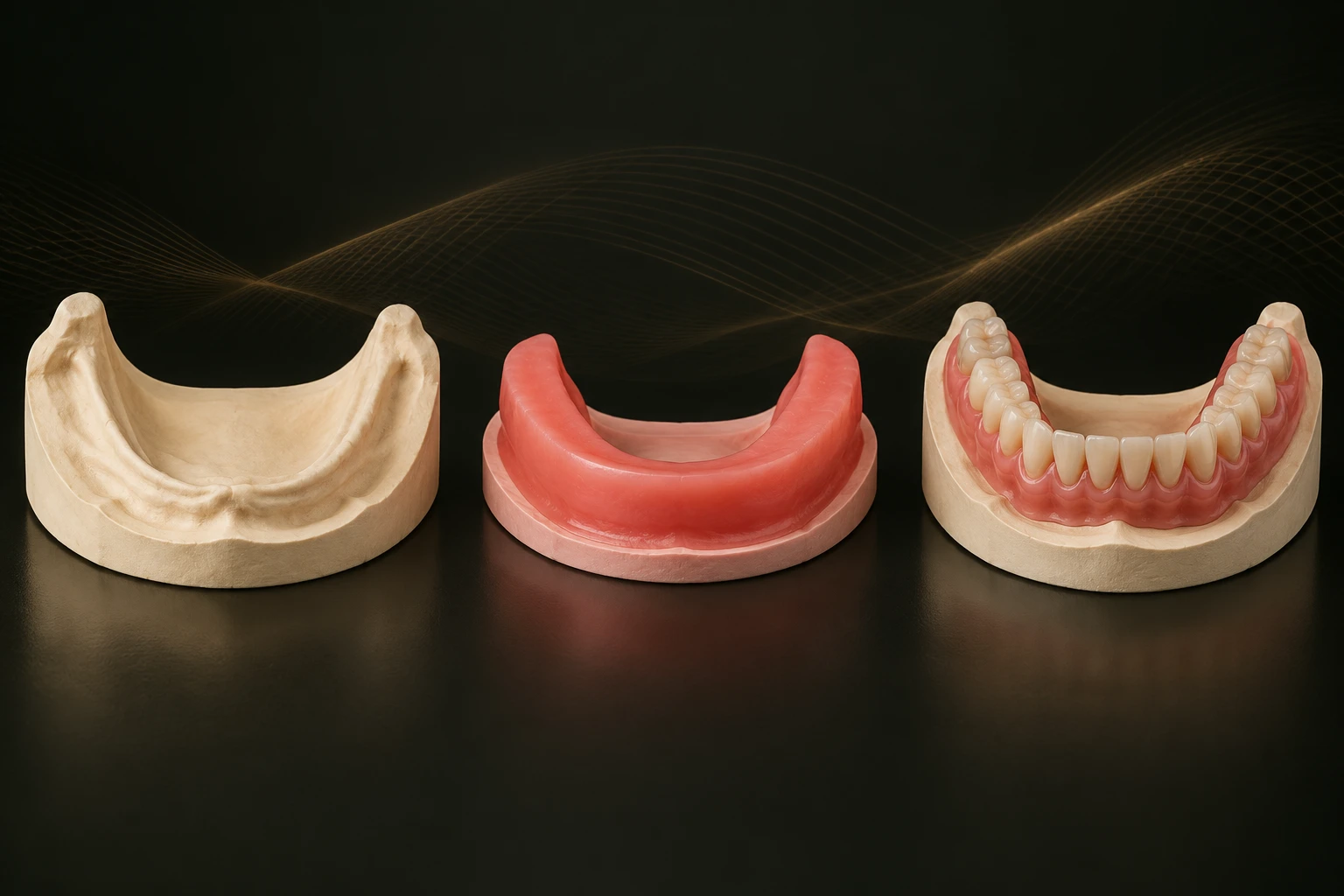
Illustrative planning objects: a dental cast, a wax bite rim, and a trial tooth arrangement. Stages may be combined or repeated; not every workflow uses these objects.
04 / FITTING & ADAPTING
Fitting is
a beginning.
Learning, checking and adjusting.
New dentures can initially feel unfamiliar or bulky. Eating and speaking may take practice. Follow-up visits allow your dentist to check the fit and address pressure areas.
Persistent soreness or irritation deserves a review—not an attempt to adjust the denture yourself. The separated view illustrates tissue support, not a promise of perfect fit.
Tissue support+
Tissue support · A conventional complete denture rests on the tissues. Its base is shaped for the individual mouth.
Getting used to it+
Getting used to it · Eating and speaking may take practice. Follow the instructions given for your own denture.
Follow-up+
Follow-up · Your dentist can assess pressure areas and make appropriate adjustments. Do not trim or reshape it yourself.
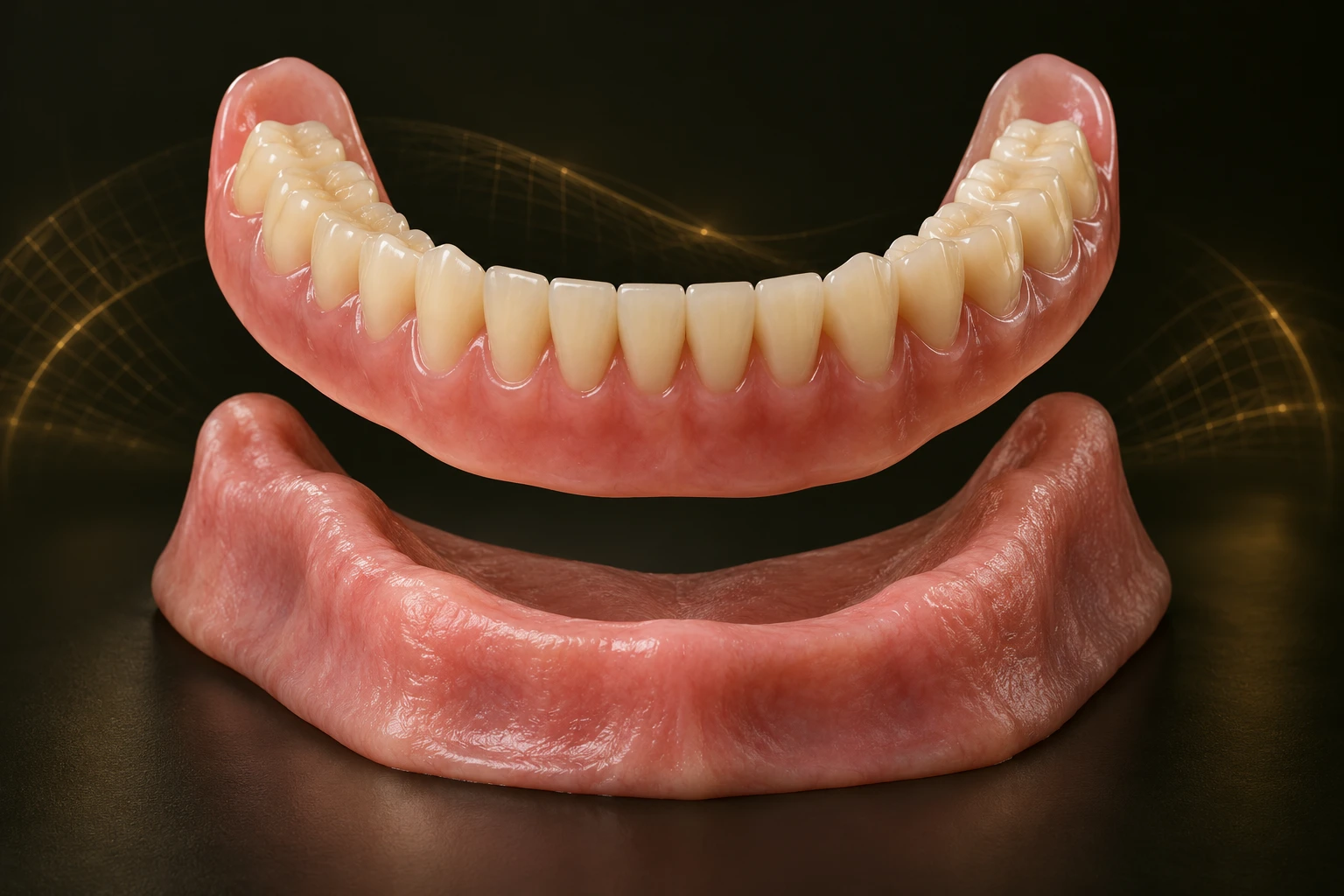
A conventional lower denture shown apart from its supporting tissue ridge. The gap is for explanation only, not the intended fit or a path of insertion.
05 / DAILY CARE
Care for the denture.
And the mouth beneath it.
Small routines. Ongoing attention.
Remove and clean dentures daily with a suitable nonabrasive denture cleanser and a soft brush. Rinse thoroughly before reinserting. Clean your mouth and any remaining natural teeth, too.
Your dentist will explain removal, storage and products suited to your denture. Avoid hot water, which can distort it. Denture cleansers belong outside the mouth.
Remove+
Remove · Follow your dentist’s instructions. Removable dentures are usually taken out at night; immediate-denture instructions may differ initially.
Clean+
Clean · Use a suitable nonabrasive denture cleanser and soft brush, then rinse thoroughly. Handle the denture carefully to avoid dropping it.
Care for your mouth+
Care for your mouth · Clean the gums, tongue and any remaining natural teeth as advised. Implant attachments also need appropriate hygiene.
Store+
Store · Follow instructions for your specific denture material and storage product. Keep the appliance away from hot water.
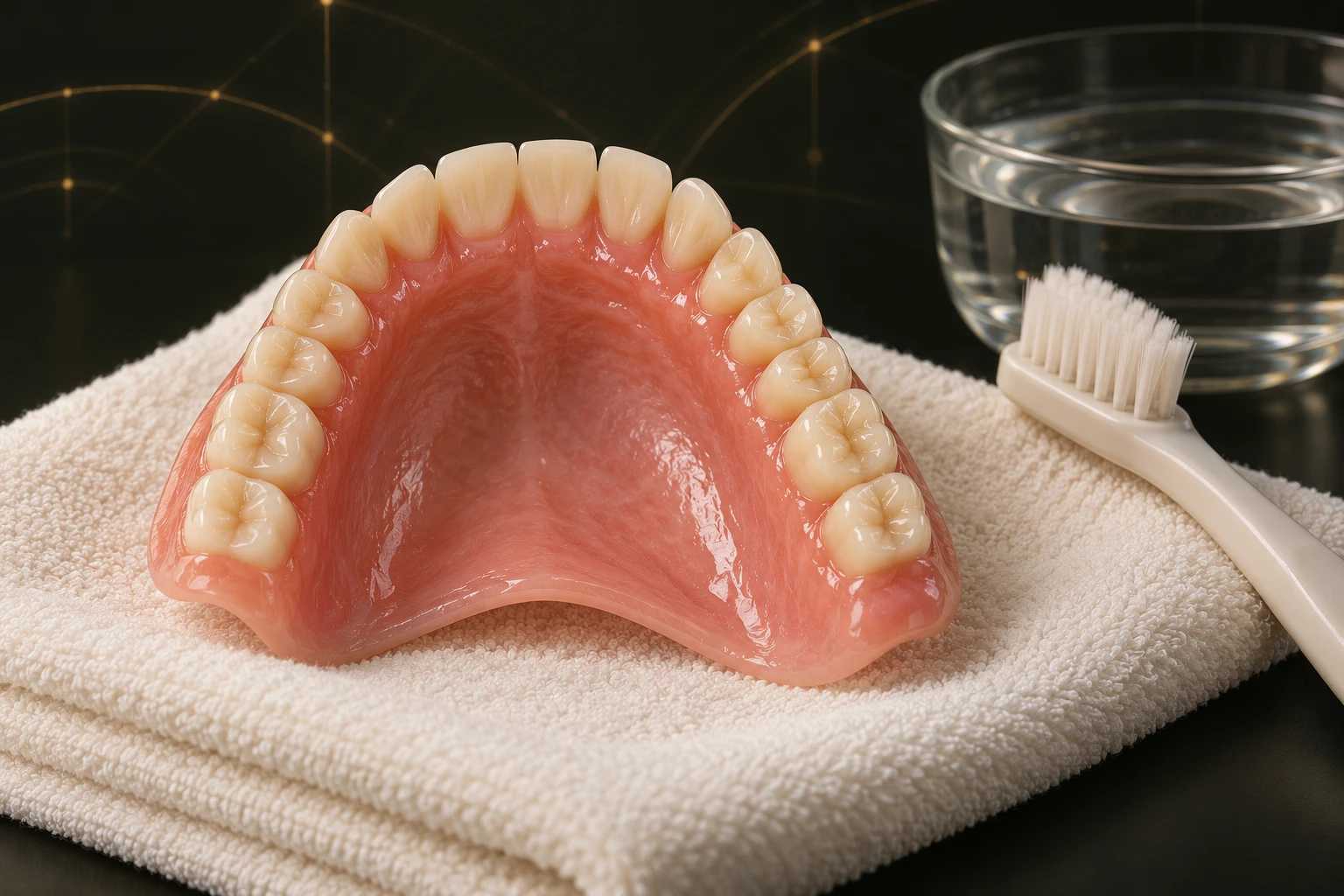
Handle the denture over a soft towel or water-filled basin. A soft brush is part of daily care; cleaning and storage products depend on your denture.
06 / LONG-TERM CARE
Your mouth changes.
Care continues.
A good fit needs ongoing attention.
Gums and supporting bone can change, and dentures can wear or become damaged. Keep the reviews recommended by your dentist. Slipping, clicking, pain or breakage are reasons to ask for an assessment.
Adjustments, a reline or replacement may be considered. More adhesive is not a substitute for checking a poor fit. Do not file, bend or glue a denture yourself.
Fit+
Fit · Changes in the supporting tissues can affect how a denture sits and feels.
Wear+
Wear · Teeth, bases and attachment components may need professional maintenance or repair.
Review+
Review · Your dentist evaluates the denture and your oral tissues, then discusses the appropriate next step.
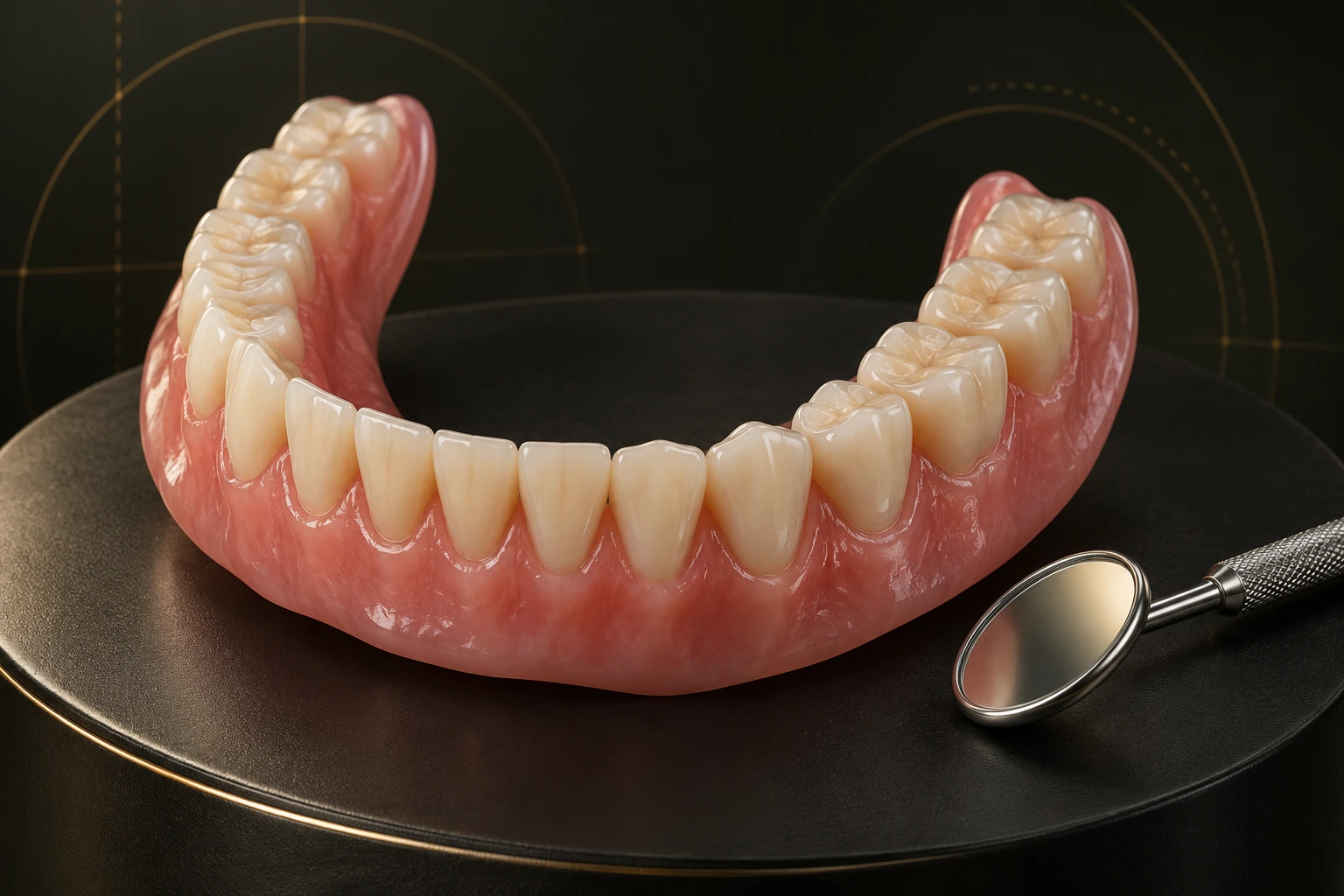
A removable lower denture and dental mirror represent ongoing professional review of the appliance and your mouth—not a home adjustment procedure.
Questions worth asking.
Can dentures be fitted immediately after teeth are removed?+
Sometimes. An immediate denture is prepared in advance and placed when teeth are removed. Healing changes the tissues, so later adjustments, relining or replacement may be needed.
Should I sleep in my dentures?+
They are usually removed at night. Follow your dentist’s instructions, especially during the initial period with an immediate denture.
Can I adjust a sore spot myself?+
Do not file, bend or glue your denture yourself. Contact your dentist for assessment, repair or adjustment.
Will dentures feel exactly like natural teeth?+
No. They feel and function differently. Adaptation and professional adjustments are part of care.
A THOUGHTFUL NEXT STEP
Start with your questions.
A consultation is a chance to discuss your goals, explore options and understand the proposed next steps.