REYES PATIENT EDUCATION · 004
Orthodontics.
Thoughtfully planned.
Explore how orthodontic care is planned, how teeth move gradually, and the daily habits that support treatment and retention.
Educational information · Not patient-specific
Orthodontic care is provided by Dr. Ruben Reyes, a general dentist with a special interest in orthodontic treatment. Dr. Reyes is not an orthodontist or dental specialist.
Explore the story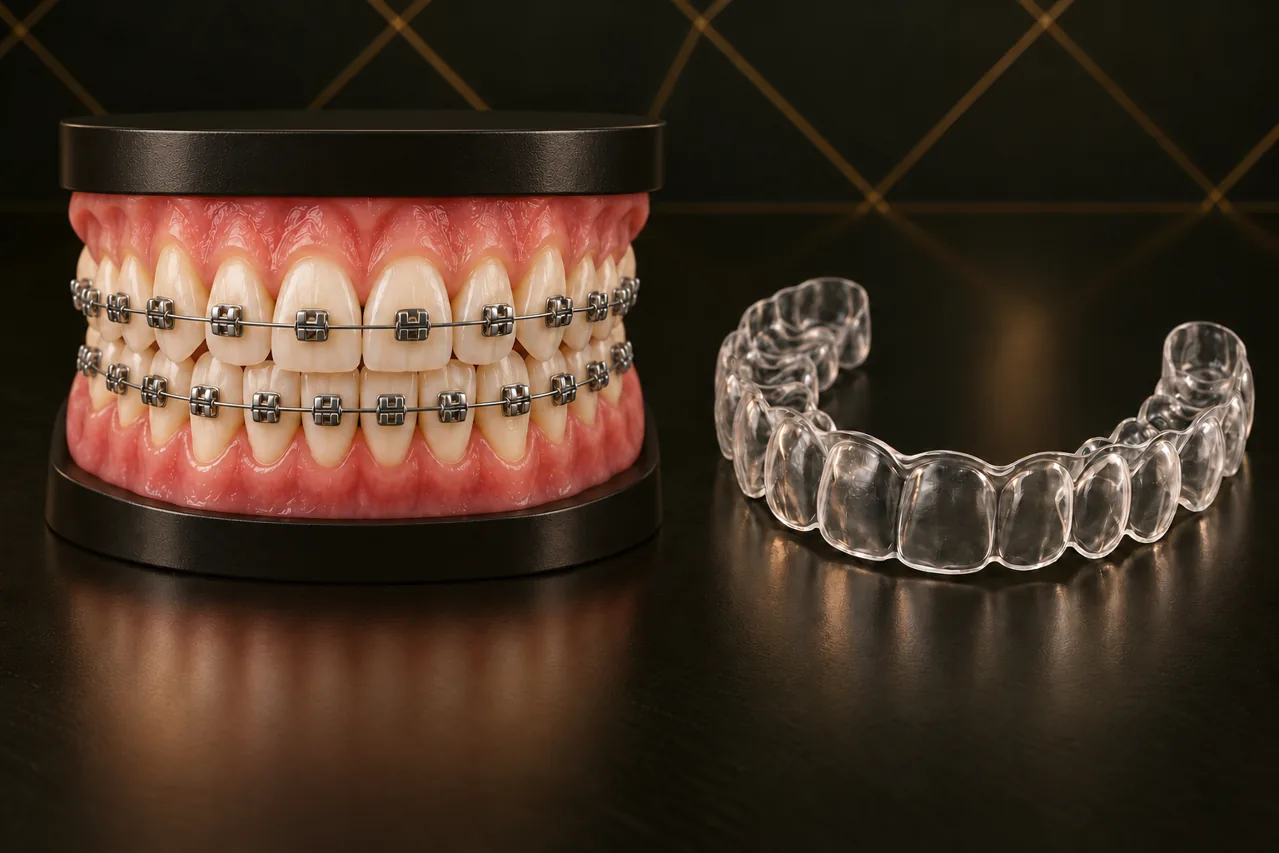 MOVEMENT WITH PURPOSE. CARE OVER TIME.
Six rendered studies, with closer views and clear explanations. These AI-generated illustrations explain concepts—not your anatomy, an appliance prescription, or a predicted result. The gold lattice is decorative.
01 / ASSESSMENT & PERSONAL GOALS
Understand first.
Plan together.
Your bite is more than a row of teeth.
An examination and diagnostic records help your clinician understand your teeth, bite and supporting tissues. Discuss your goals, dental history and daily routines. Photos, scans or impressions and appropriate X-rays may inform the plan.
Dr. Ruben Reyes is a general dentist with a special interest in orthodontic treatment, not an orthodontist or dental specialist. Suitability and any need for referral are assessed individually.
Assessment+
Assessment · Tooth and gum health, the bite, and growth where relevant all matter. An attractive digital image cannot replace an examination.
Records+
Records · Different records answer different questions. Your clinician decides which are appropriate; not everyone needs the same imaging.
Your priorities+
Your priorities · Discuss appearance, function, daily responsibilities, cost and alternatives before deciding on care.
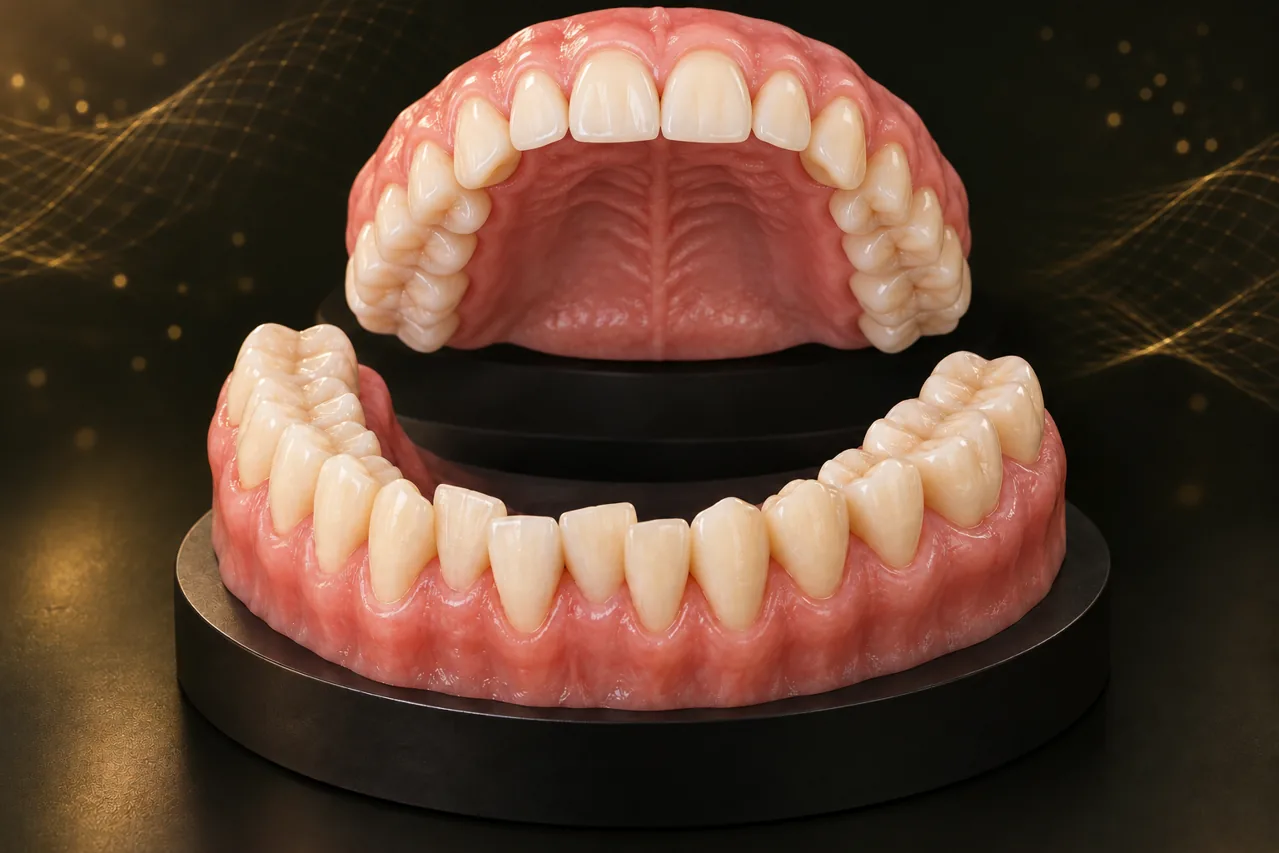
Natural upper and lower study models illustrate assessment of alignment and the bite. They are not patient scans or an approved treatment plan.
02 / APPLIANCE OPTIONS
Different tools.
Individual choices.
The appliance follows the plan.
Fixed braces use brackets and a wire attached to teeth. Clear aligners are a series of removable trays. Both require professional planning and monitoring; their suitability depends on the movements needed and your individual circumstances.
These are general treatment categories, not a list of appliances offered by this practice. No option is best for everyone, and a less visible appliance is not automatically a simpler treatment.
Fixed braces+
Fixed braces · Brackets and wires apply controlled forces. Cleaning and food choices need particular attention around the appliance.
Clear aligners+
Clear aligners · Trays are worn and changed as prescribed. Attachments or other components may be part of an individual plan.
Choosing together+
Choosing together · Ask what each option can and cannot address, what care involves, and which alternatives are appropriate for you.
Conceptual comparison of fixed braces and a clear aligner. The illustrations do not prescribe hardware, attachments or a sequence.
03 / GRADUAL TOOTH MOVEMENT
Small forces.
Biological change.
Movement needs time and professional review.
Orthodontic forces act through the tissues around tooth roots. The supporting bone remodels as teeth gradually move. Your clinician checks the response and may adjust the plan as treatment progresses.
Treatment carries risks, including enamel damage or tooth decay, gum problems and root shortening. Their significance varies. Your clinician explains individual risks, prevention and monitoring; results and duration cannot be guaranteed.
Controlled forces+
Controlled forces · Braces and aligners guide movement through planned forces. More pressure does not mean a safer or faster result.
Tissue response+
Tissue response · Teeth are held by living supporting tissues. The drawing simplifies a biological process; it is not a real-time simulation.
Monitoring+
Monitoring · Reviews assess progress and oral health. Adjustments, further records or a change of approach may be needed.
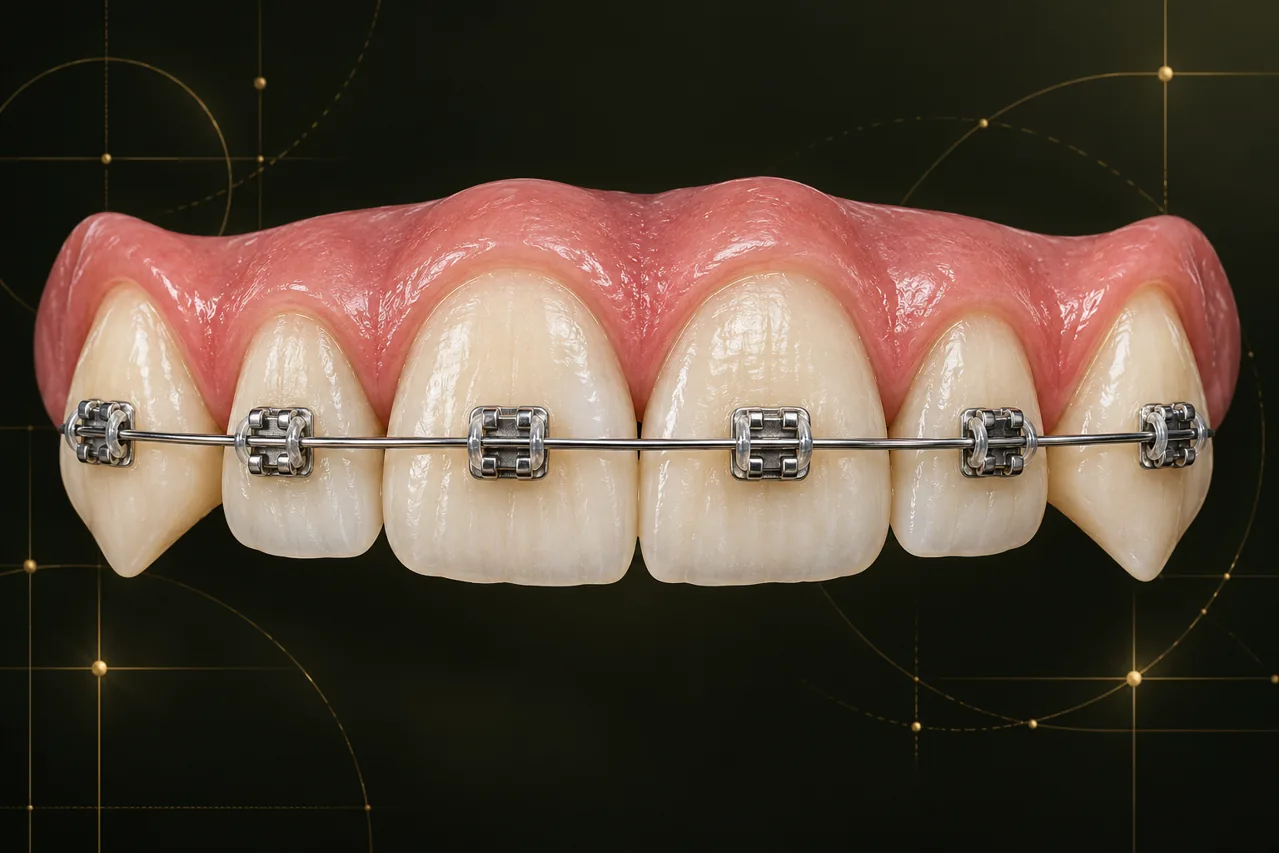
Close-up of brackets and an archwire on front teeth. The image shows appliance components, not actual movement, force direction or a before-and-after result.
04 / YOUR PART IN TREATMENT
A shared plan.
Everyday follow-through.
Questions and communication are part of care.
Attend planned reviews and follow your own appliance instructions. If aligners or elastics are prescribed, wear them as directed. Tell the team about breakages, poor fit, persistent pain or difficulty following the plan.
Do not improvise elastic positions, double up bands, skip aligner stages or try to reshape an appliance. Ask the treating team what to do rather than changing treatment yourself.
Appointments+
Appointments · Keep reviews and contact the team if a visit is missed. Monitoring remains important even when the appliance looks unchanged.
Prescribed wear+
Prescribed wear · Follow the schedule and placement you were given. Instructions are specific to your treatment, not a general rule from an illustration.
When something changes+
When something changes · Report a loose bracket, damaged or lost appliance, or ongoing discomfort. Do not wait for the next routine review to ask for advice.
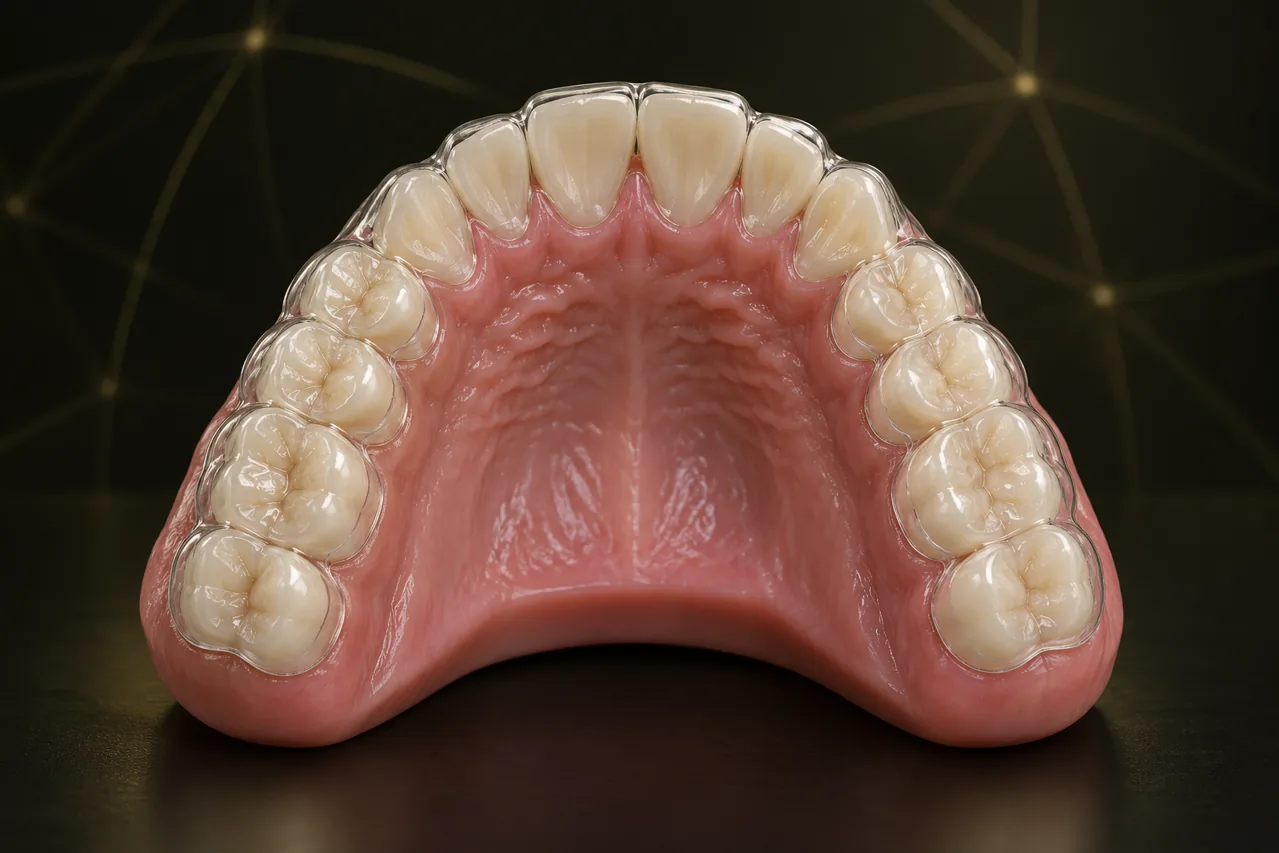
A clear aligner seated on an upper dental model represents prescribed appliance wear. It is not an instruction for fit, wear hours or changing trays.
05 / DAILY ORAL CARE
Look after the teeth.
Not just the appliance.
Healthy tissues support the treatment journey.
Clean teeth carefully with fluoride toothpaste and clean between them using tools recommended for your appliance. Pay attention around brackets and along the gumline. Continue regular dental checkups during orthodontic care.
Plaque and frequent sugary foods or drinks increase the risk of decay and gum problems. Ask for help if cleaning is difficult or your gums remain sore, swollen or bleed.
Cleaning+
Cleaning · Your team can demonstrate how to clean around braces or attachments. Remove aligners for meals and clean your teeth and trays as instructed.
Food & drink+
Food & drink · With fixed braces, hard or sticky foods can damage the appliance. Follow specific food advice and limit sugary snacks and drinks.
Regular dental care+
Regular dental care · Orthodontic appointments do not replace routine dental examinations and professional cleaning when recommended.
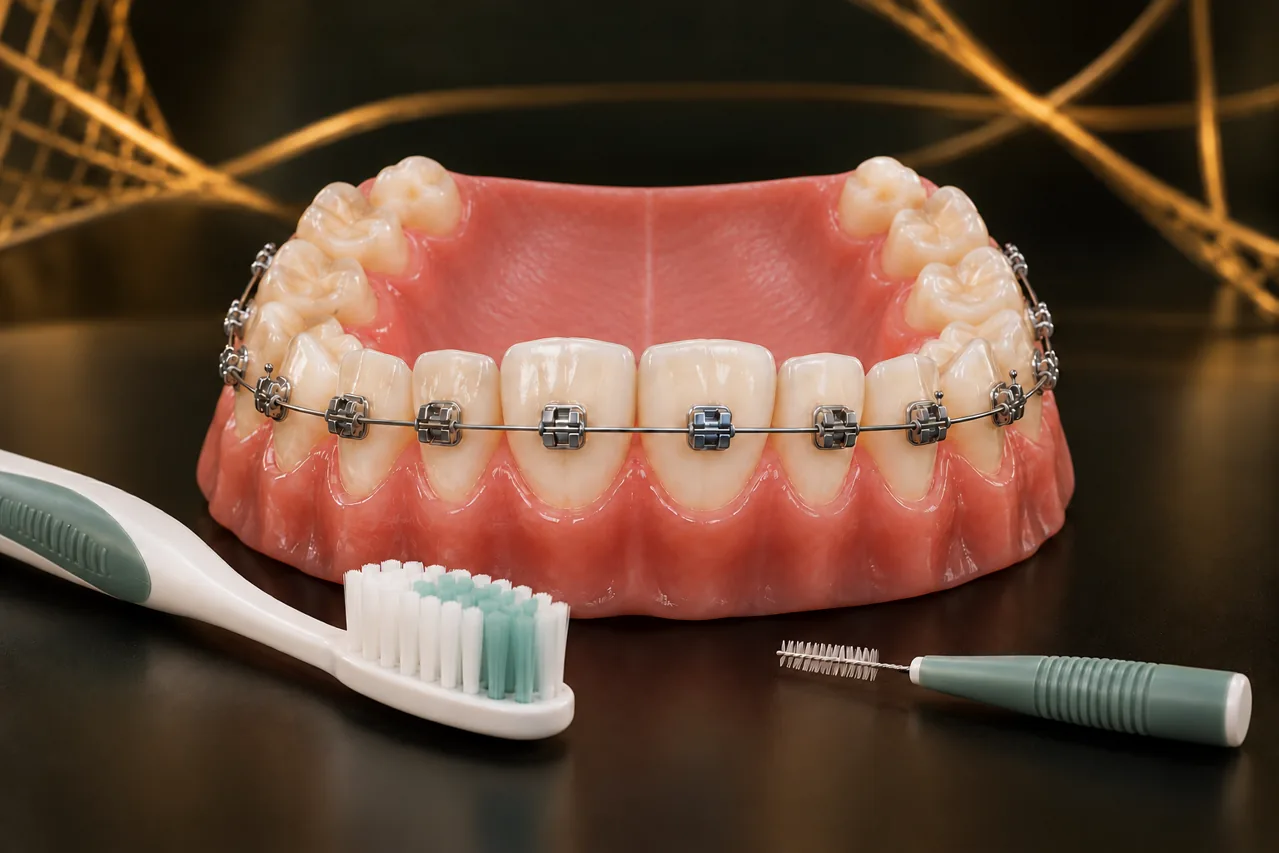
Simplified upper-jaw teaching model, turned for viewing. Brush positions and tools are illustrative; ask your team to demonstrate a technique suited to your appliance.
06 / RETENTION & ONGOING REVIEW
Active treatment ends.
Care continues.
Retention is part of the plan—not an afterthought.
Teeth can change position after active treatment and throughout life. Retainers help maintain alignment. They may be removable, fixed or a combination; the type and wear schedule are individualized.
Long-term retention is often needed. Keep retainers clean and attend recommended reviews. Contact the team promptly if one is lost, damaged, loose or no longer fits; do not force or reshape it.
Why retain+
Why retain · Supporting tissues adapt after tooth movement, and later changes can still occur. Retainers help limit unwanted movement.
Your retainer+
Your retainer · Follow the prescribed wear and cleaning instructions. A fixed retainer also needs careful cleaning and checks.
Ongoing review+
Ongoing review · Fit, wear and any bonded wire are reviewed over time. Tell your clinician about changes instead of assuming retention is no longer needed.
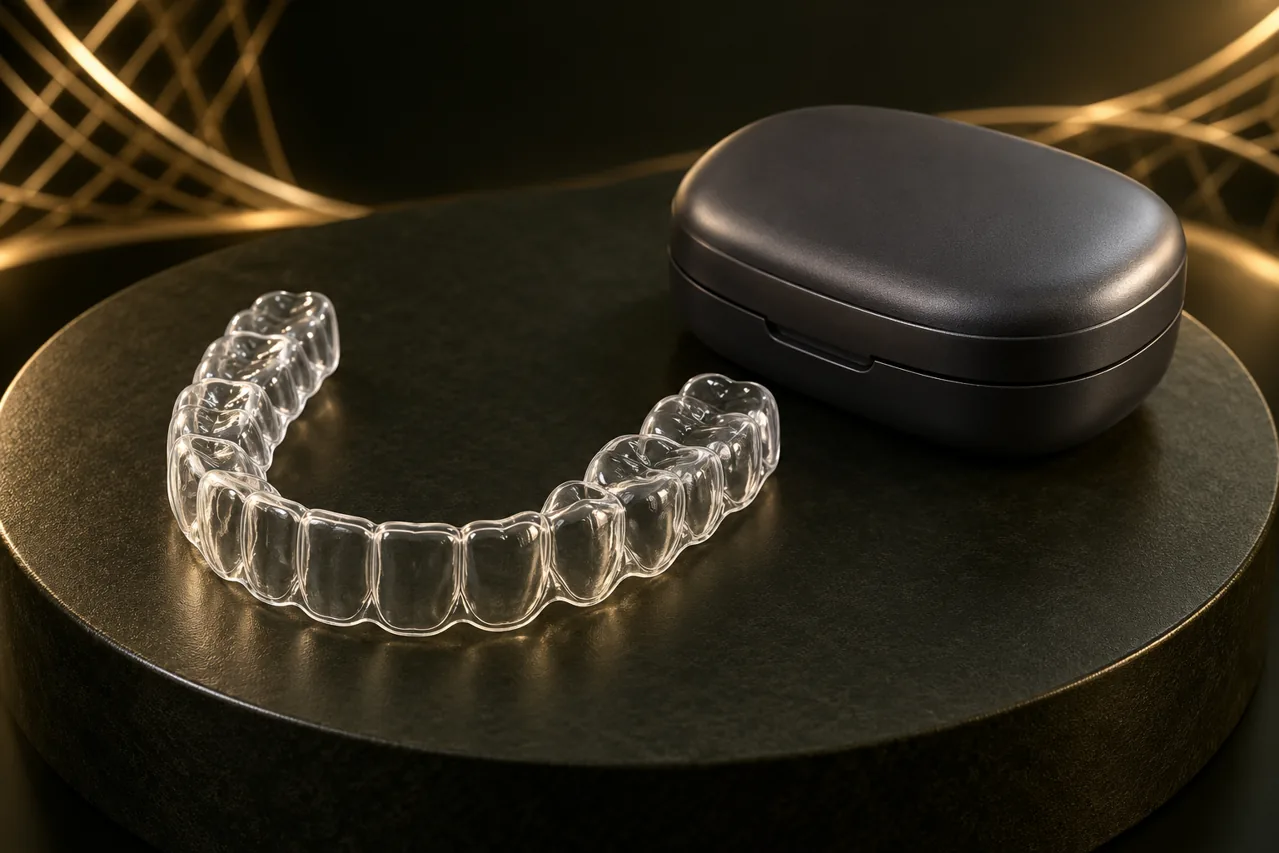
A removable clear retainer and protective case illustrate ongoing care. The design is an example, not a recommendation or a guarantee that teeth will never move.
Questions worth asking.
Is orthodontic treatment only for children?+
No. Adults can also be assessed. Tooth and gum health, the bite, growth where relevant and personal goals matter more than a blanket age rule.
Are clear aligners right for everyone?+
No. The required tooth movements and oral health must be evaluated. Braces, aligners or another approach may be discussed; this guide does not determine your suitability.
How long will treatment take?+
The estimate depends on the problem, biological response, prescribed wear and monitoring. It can change during treatment; an illustration cannot promise a completion date.
What risks should I ask about?+
Ask about tooth decay or enamel marks, gum health and root shortening, as well as risks specific to your mouth. Good hygiene and professional monitoring matter, but do not remove every risk.
What if my retainer no longer fits?+
Contact the treating team promptly. Do not force it into place or attempt to heat, bend or reshape it yourself.
A THOUGHTFUL NEXT STEP
Start with your questions.
A consultation is a chance to discuss your bite, goals, options and the responsibilities of treatment. Ask which approach, if any, is appropriate for you.