REYES PATIENT EDUCATION · PERIODONTAL CARE
Healthy foundations.
Thoughtful care.
Understand the tissues that support your teeth, what gum disease changes, and how a personal care plan can help.
Educational information · Not patient-specific
Explore the story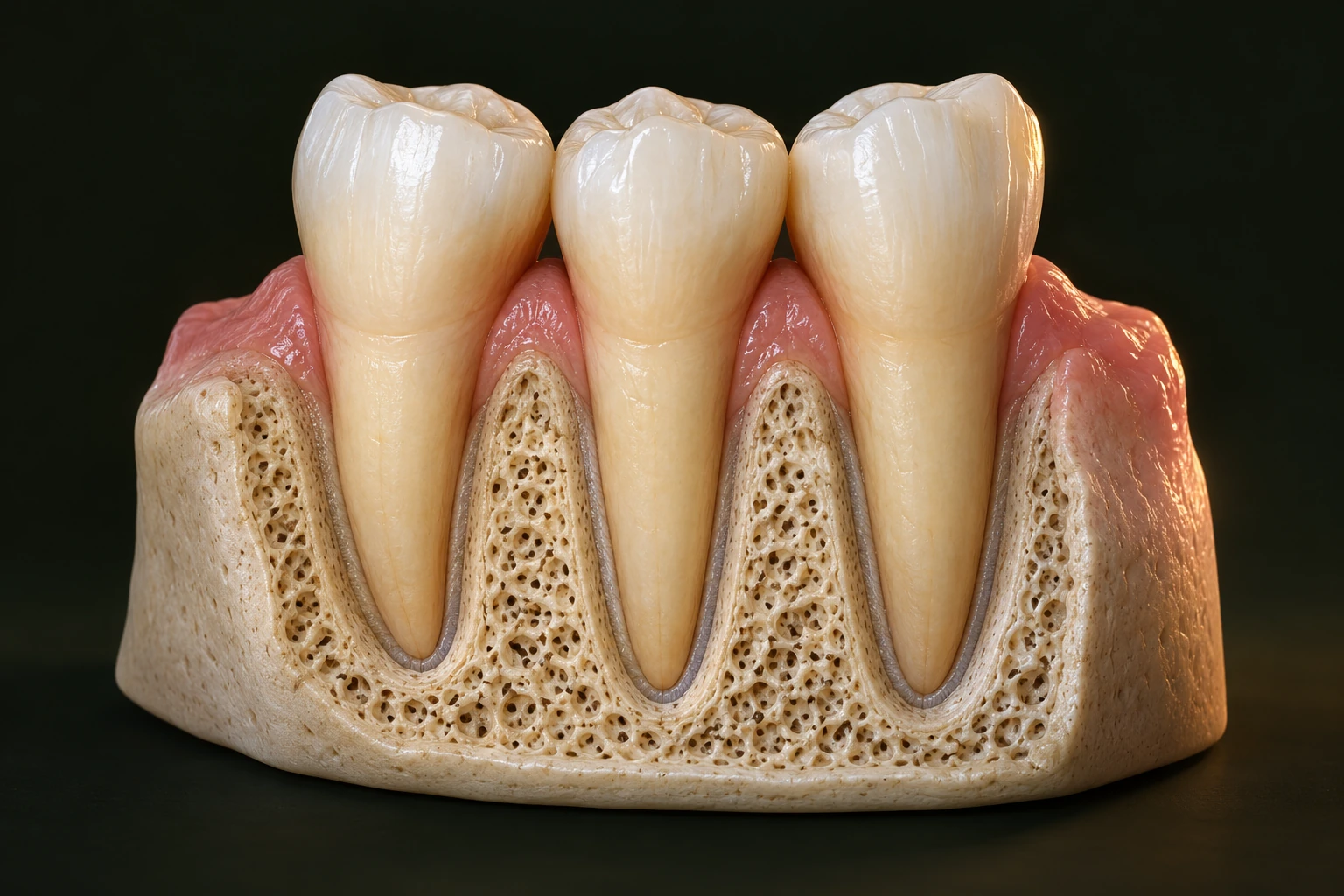 GUM HEALTH. BENEATH THE SURFACE.
Six visual chapters for a more informed conversation. The renderings simplify anatomy and are not patient scans, a diagnosis, or a promised treatment sequence.
01 / THE SUPPORTING TISSUES
More than gums.
A living foundation.
Protect the tissues that support your teeth.
Gums form the visible part of a support system. Bone surrounds the roots, while tiny ligament fibers connect the root surface to its socket. Periodontal care looks after these supporting tissues.
This cutaway simplifies anatomy. Tissue colors and proportions vary; healthy gums are not one universal color.
Gums+
Gums · The soft tissues around the teeth help protect the tissues beneath.
Supporting bone+
Supporting bone · The jawbone surrounds the tooth roots and forms their sockets.
Ligament+
Ligament · Fine connective tissue fibers attach the root surface to the surrounding socket.
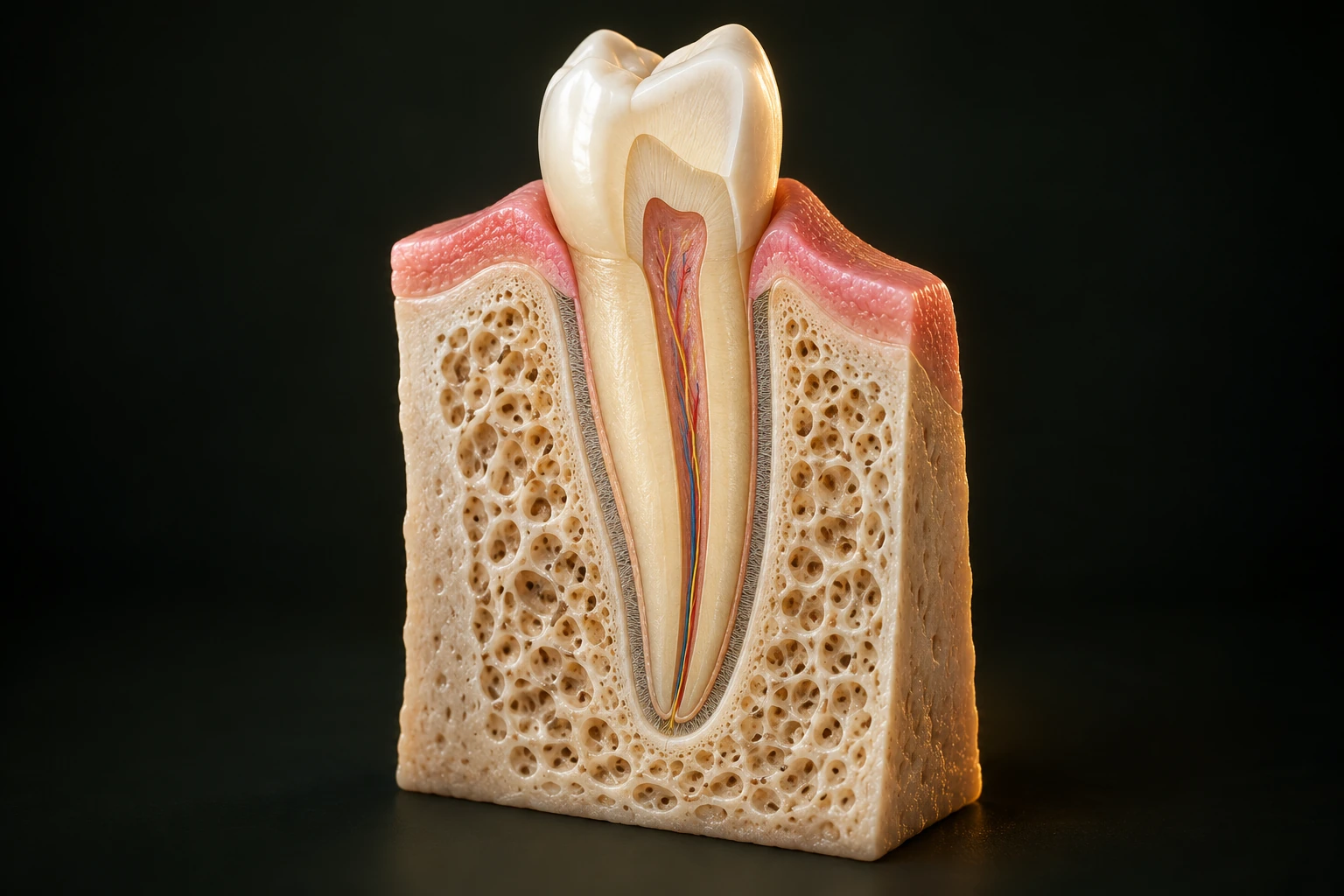
Illustrative tooth support: gum, root, periodontal ligament and surrounding bone. Not to scale.
02 / UNDERSTANDING GUM DISEASE
Inflammation.
And what lies beyond it.
Gingivitis and periodontitis are not the same.
Gingivitis is gum inflammation without the supporting-bone loss of periodontitis. It can usually be reversed with professional care and effective daily cleaning. Periodontitis damages supporting tissues and bone and needs ongoing management.
Gum disease may cause little discomfort. Lack of pain does not rule it out. The illustration is explanatory—not a diagnosis or an inevitable progression.
Gingivitis+
Gingivitis · Gums may become swollen or bleed. Professional care and daily plaque removal can help reverse inflammation.
Periodontitis+
Periodontitis · Loss of supporting tissues and bone can lead to loose teeth. Treatment aims to control disease; routine cleaning does not replace lost bone.
Warning signs+
Warning signs · Bleeding, persistent bad breath, recession, loose teeth or a changing bite deserve a dental assessment.
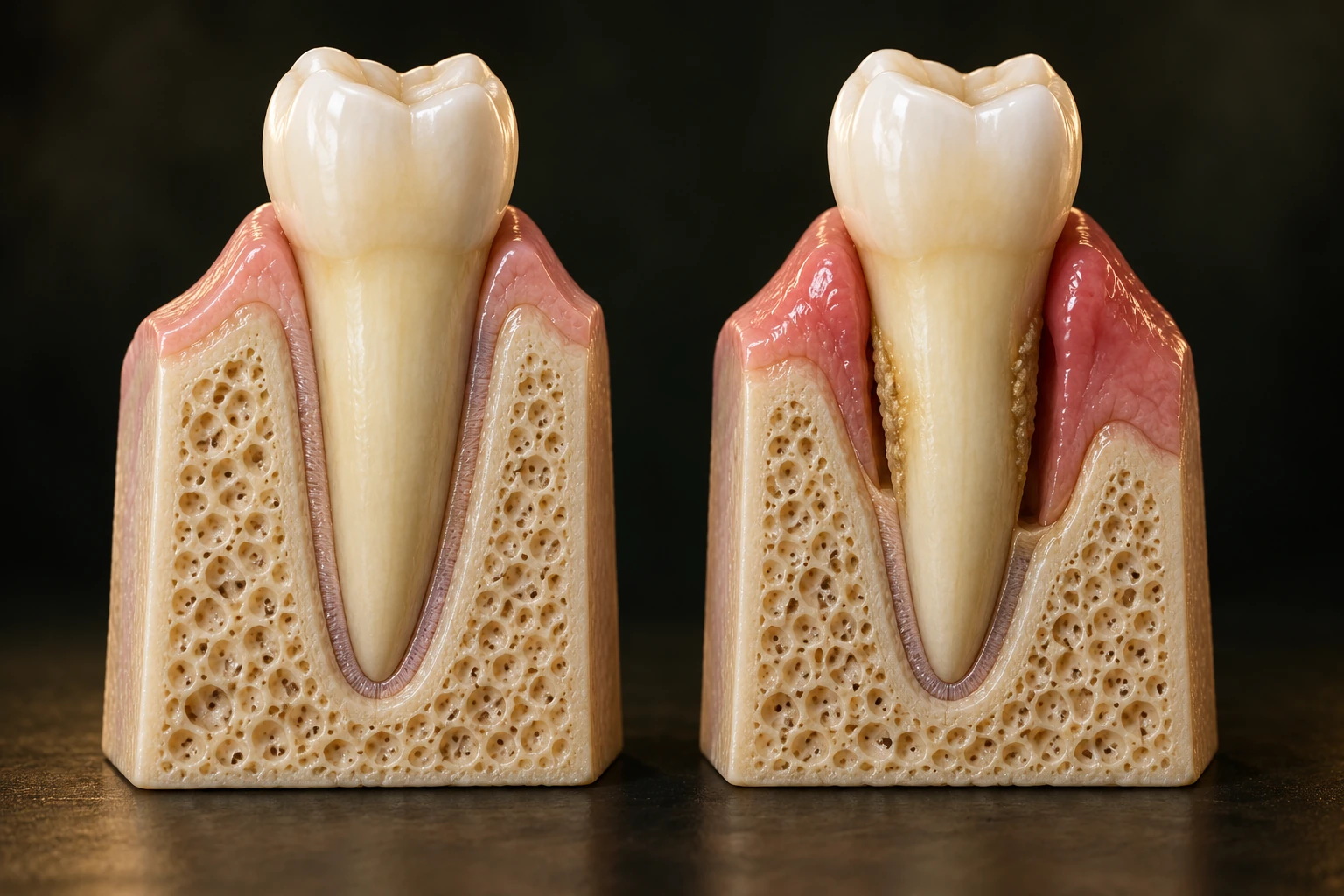
Left: healthy support. Right: periodontal pockets and reduced bone support. Gingivitis is discussed in the text but is not a separate model here. Not a before-and-after result.
03 / YOUR ASSESSMENT
Measurements.
With a bigger picture.
A diagnosis needs more than a single number.
Your dental team assesses bleeding, pocket depths, recession and tooth stability. X-rays may help assess bone loss. Findings are considered together with your medical history and risks to guide a personal plan.
Pocket measurements alone do not determine a diagnosis. Tell your team about medications, tobacco use and health conditions, including diabetes.
Gum examination+
Gum examination · A small probe measures the spaces around teeth; your team also checks for bleeding and recession.
X-rays+
X-rays · When indicated, images help assess the supporting bone alongside the clinical examination.
Your health+
Your health · Health history and risk factors influence the plan. A periodontist may be involved when specialist care is appropriate.
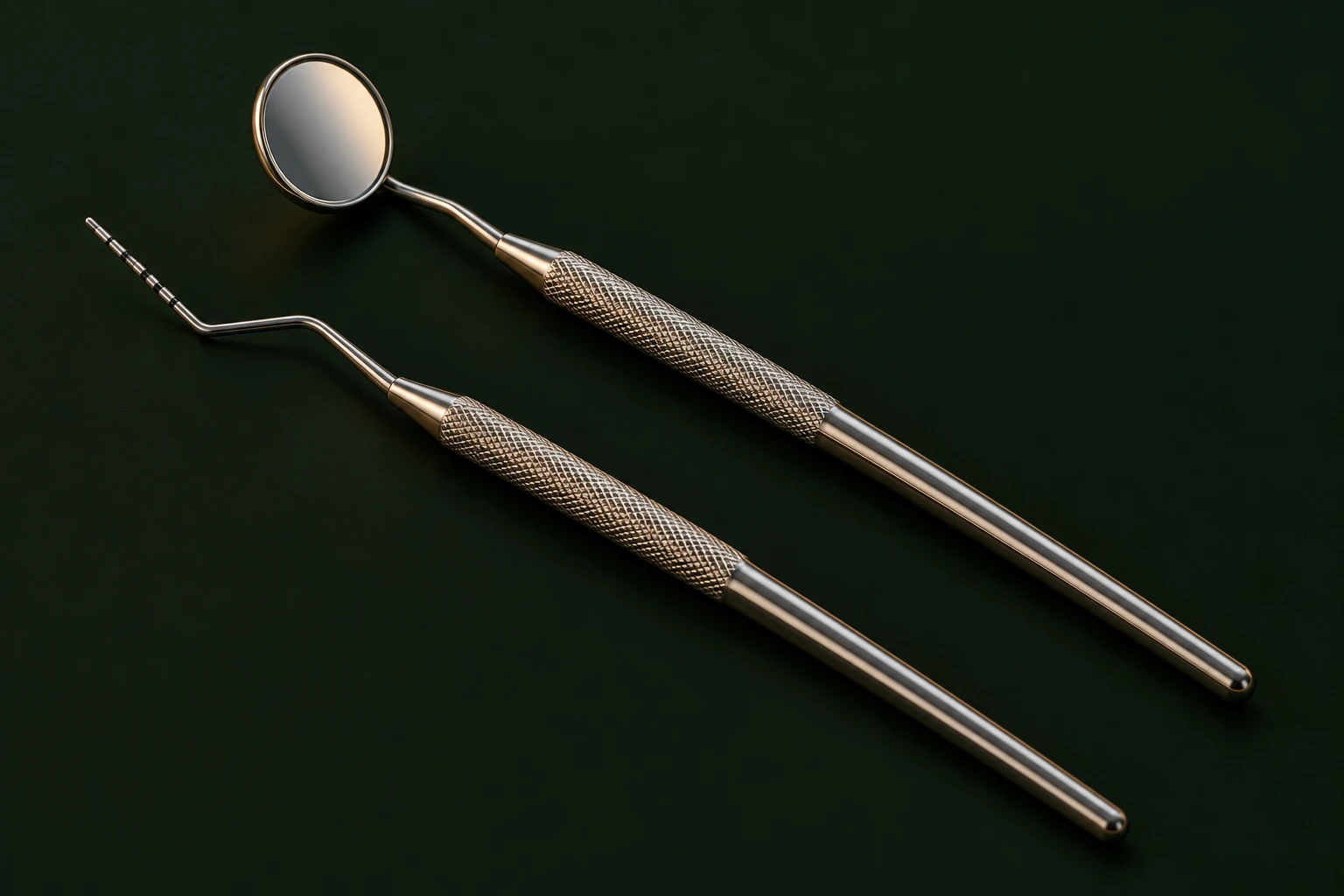
A periodontal probe and dental mirror represent a professional examination. Probe markings are illustrative, not a calibrated measuring reference.
04 / TREATMENT & REASSESSMENT
Clean carefully.
Then reassess.
Your response helps guide the next step.
Scaling and root planing removes plaque and hardened deposits from affected tooth and root surfaces, including below the gumline. Local anesthetic may improve comfort, and treatment may take more than one visit.
Care is tailored to your findings. This illustration explains access for cleaning—not a procedure to attempt yourself or a promise of tissue regrowth.
Deep cleaning+
Deep cleaning · Professional instruments remove deposits where home brushing cannot reach. Medicines may be added when appropriate, not used instead of necessary cleaning.
Healing+
Healing · Temporary tenderness or sensitivity can occur. Follow your team’s instructions and report persistent or worsening symptoms.
Recheck+
Recheck · Your team reassesses healing and pockets to decide whether maintenance or additional care is needed.
Selected surgery+
Selected surgery · Persistent pockets or certain defects may need specialist care. Surgery can improve access; selected cases may benefit from regeneration or gum grafting. Benefits, risks and results vary.
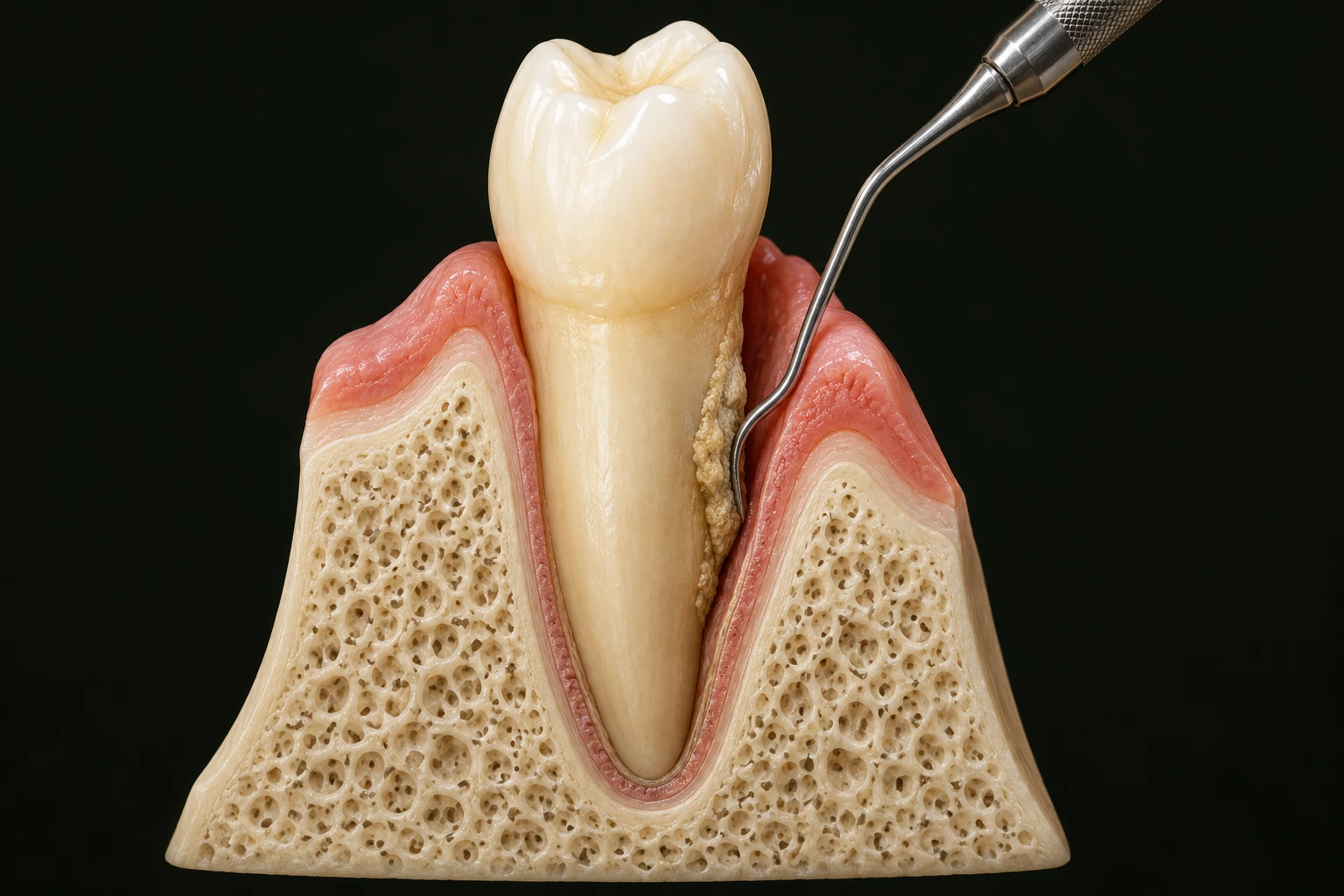
A professional instrument approaches deposits on a root surface. Cleaning and surgery serve different needs; not everyone needs surgery.
05 / DAILY CARE
Small habits.
A daily commitment.
Home care supports professional treatment.
Brush twice daily with fluoride toothpaste and clean between teeth each day. Ask your dental team which tools suit your spaces and how to use them gently.
Avoid tobacco. If you have diabetes, continue working with your medical team on its management. Home care does not replace professional periodontal treatment.
Brush+
Brush · Use a soft brush and a technique your dental team recommends. Consistent, gentle cleaning matters.
Clean between+
Clean between · Floss or appropriately sized interdental tools help remove plaque where the brush cannot reach. Ask for a demonstration.
Reduce risks+
Reduce risks · Discuss tobacco cessation support and relevant health conditions. Tell your dental team when your health or medications change.
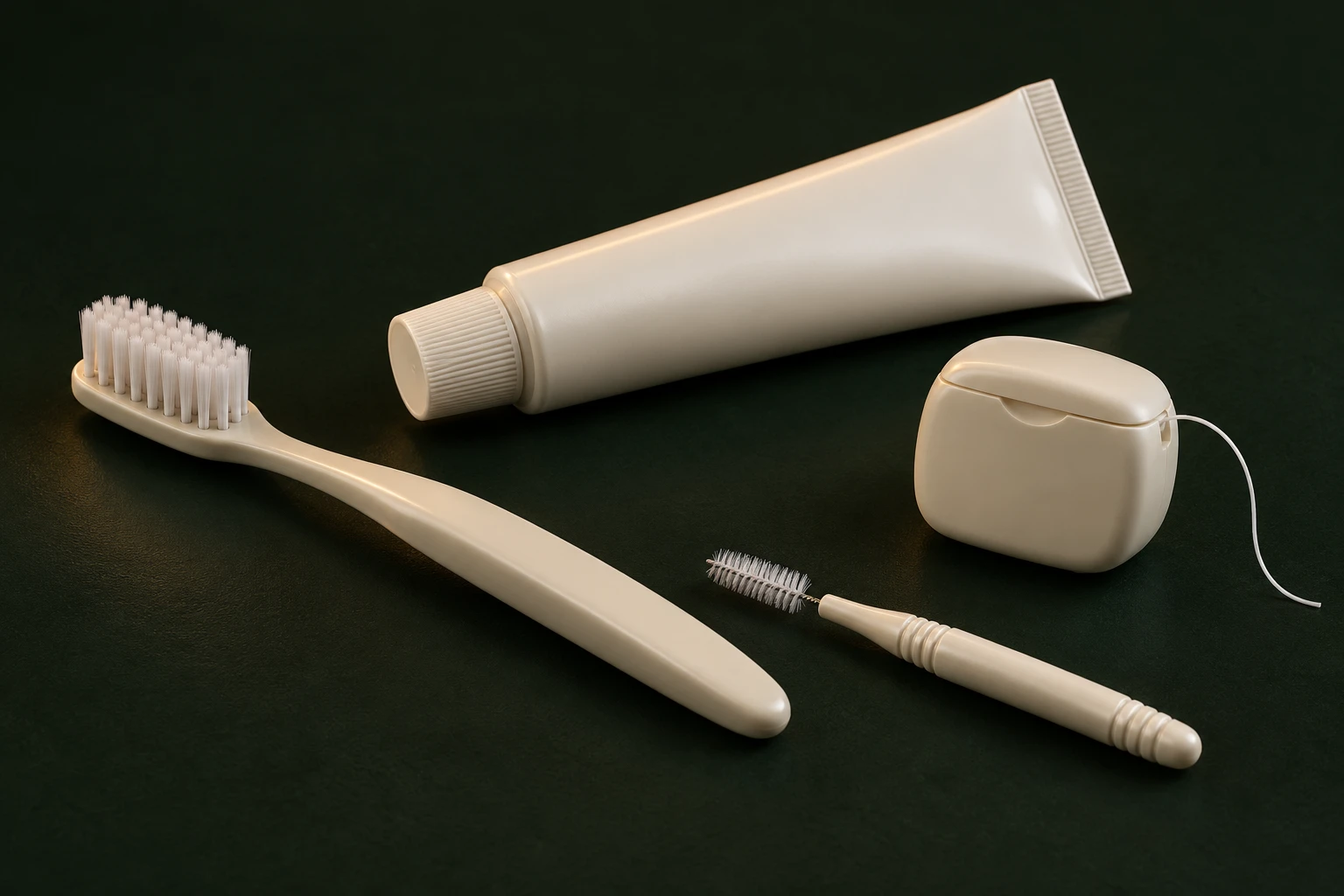
A soft toothbrush and interdental cleaning tools represent a personalized home-care routine. Tool choice and size should be discussed with your team.
06 / CONTINUING CARE
Care continues.
Progress is personal.
A maintenance plan, not a one-time cure.
Periodontal maintenance includes reassessment and cleaning of areas at risk. Your team personalizes the interval according to your condition, risk factors and response. Keep the visits recommended for you.
Treatment aims to control inflammation and infection and help preserve teeth. Healing, tooth retention and tissue regeneration cannot be guaranteed.
Your interval+
Your interval · Maintenance is not the same as a routine cleaning. The timing is individualized and may change with your findings.
Your goals+
Your goals · Discuss realistic aims for comfort, gum stability and keeping teeth, along with the limits of each option.
Your questions+
Your questions · What is my diagnosis? How will we measure progress? What should prompt a call? When should I return?
The healthy-support illustration is reused as a symbol of ongoing care. It is not a before-and-after result or a promise that lost bone will regrow.
Questions worth asking.
Will I need surgery?+
Not everyone does. Your response to initial treatment and the type of remaining problems guide whether additional treatment or specialist assessment is appropriate.
Can I have gum disease without pain?+
Yes. Periodontal disease may cause little discomfort. An examination can detect problems that symptoms alone do not reveal.
Will lost bone grow back after cleaning?+
Routine deep cleaning does not automatically replace lost bone. Regenerative procedures may help selected defects, but they are not suitable for every case and results cannot be guaranteed.
Can antibiotics replace periodontal treatment?+
No. Medication may be used for selected situations, but it does not replace necessary professional treatment and daily plaque control. Use medicines only as prescribed.
When should I get urgent help?+
Seek urgent dental care for new swelling, pus, severe pain or fever with dental symptoms. Trouble breathing or swallowing, or major mouth or neck swelling, needs emergency medical care now.
New swelling, pus, severe pain or fever with dental symptoms needs urgent dental assessment. Trouble breathing or swallowing, or major mouth or neck swelling, needs emergency medical care now.
A THOUGHTFUL NEXT STEP
Start with your questions.
What is my diagnosis? Which options fit my needs? How will we measure progress? When should I return? Discuss these questions with your dental team.