REYES / Patient Education
Understanding tooth decay
Explore how decay develops, when early changes may be reversed, and how dental care can help protect your teeth.
Start the module ↓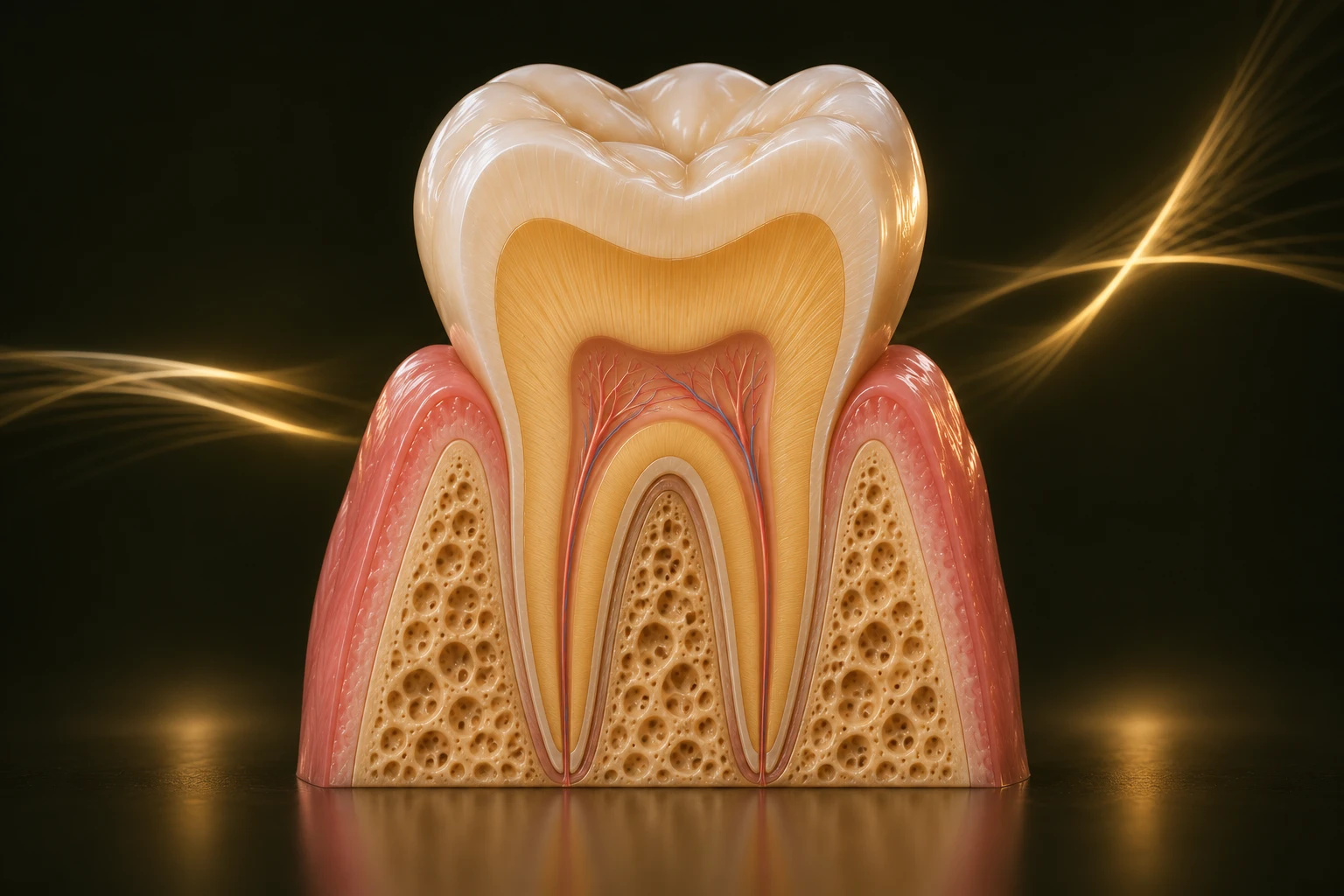
Educational illustrations, not a diagnosis. Every tooth is different; an examination determines the care you need. Images simplify anatomy and do not show an inevitable sequence.
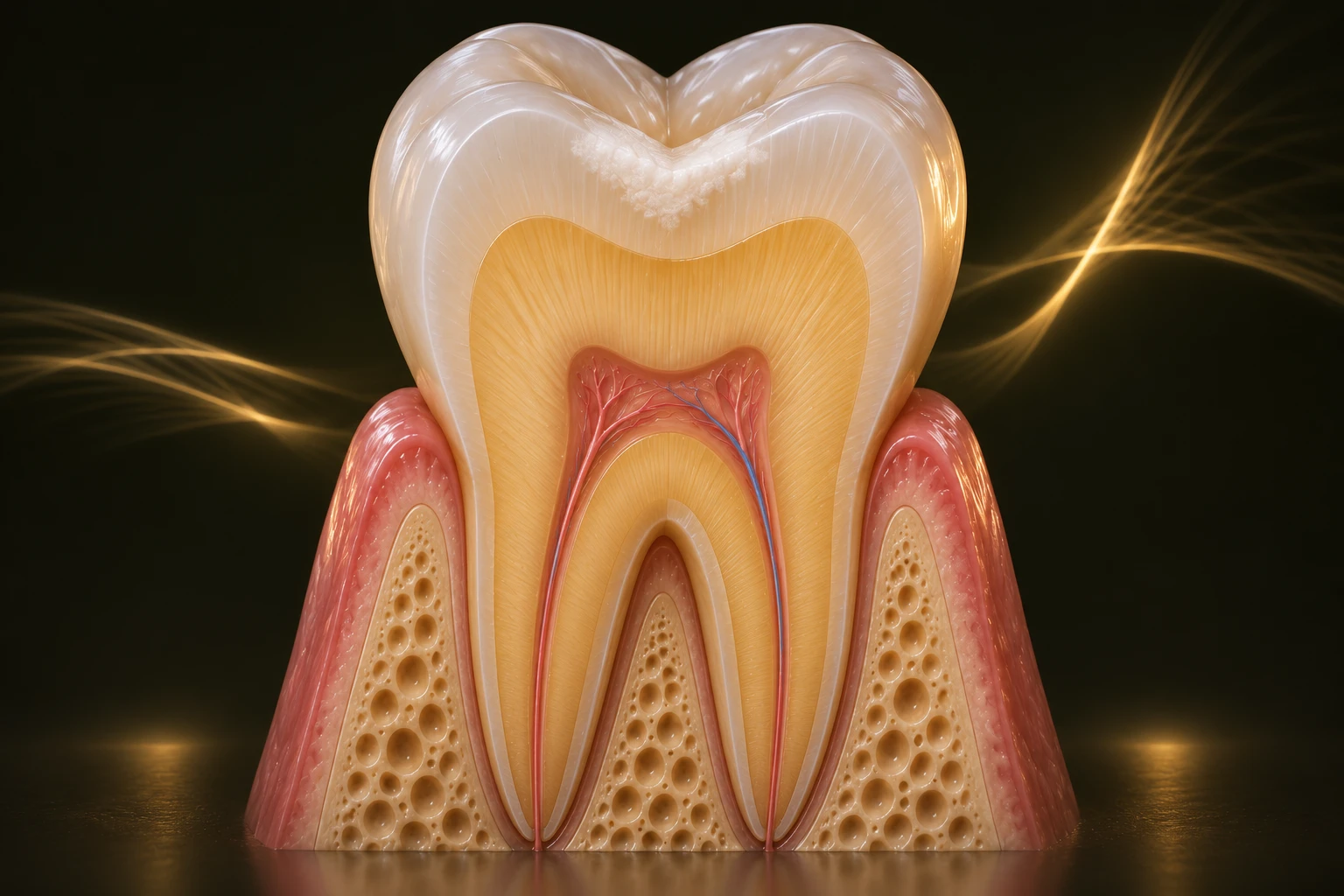
Early enamel changes
Early mineral loss may be reversible while the enamel surface is still intact.
Explore the chapter →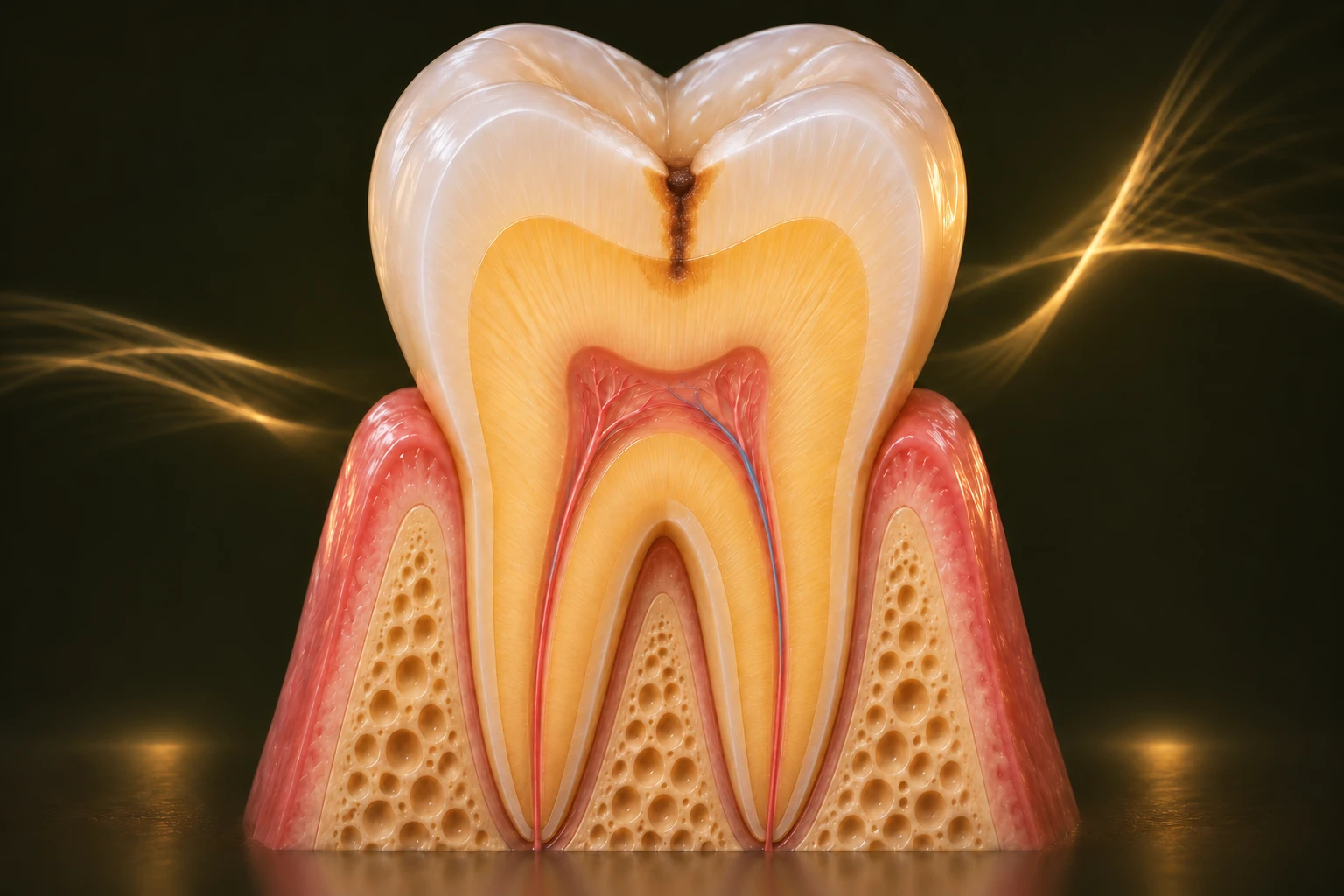
A small cavity into dentin
When enamel breaks down, decay can spread into the dentin beneath it.
Explore the chapter →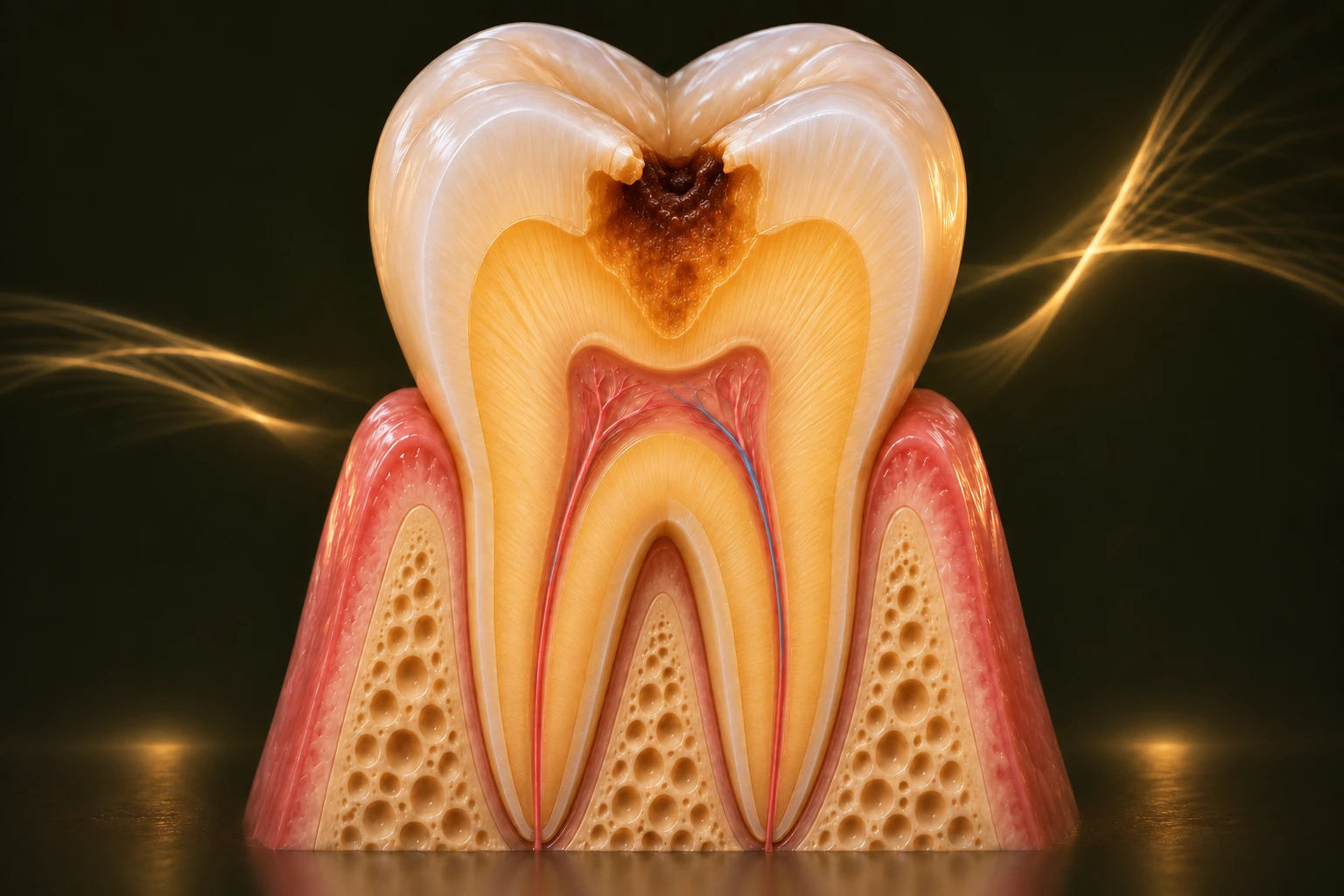
Deeper decay, nearing the pulp
Treatment depends on the tooth, the pulp, your symptoms and an individual examination.
Explore the chapter →01 / 06 · Patient Education
How decay begins
Plaque is a sticky film of bacteria that forms on teeth. When these bacteria use sugars from food and drinks, they produce acids. Repeated acid exposure can remove minerals from enamel, the tooth’s hard outer layer.
Decay develops over time, often before you notice discomfort. Everyday cleaning and fewer sugary snacks and drinks help reduce the conditions that allow it to progress.
02 / 06 · Patient Education
Early changes can be reversible
Early mineral loss may appear as a chalky white spot. Before a hole forms, the enamel surface may regain minerals from saliva with help from fluoride. This repair process is called remineralization.
Your dentist can assess whether an area needs monitoring, fluoride treatment, or another approach. Early care can help stop or reverse decay, but fluoride cannot rebuild tooth structure already lost to a cavity.
03 / 06 · Patient Education
When a cavity forms
If mineral loss continues, enamel can break down and a hole can form. Decay may then reach dentin, the softer layer underneath. Because dentin is less hard than enamel, decay can spread more easily there.
A cavity may cause sensitivity to sweets, heat, or cold, but it can also be painless. A dental examination helps determine its extent and the appropriate treatment. Do not wait for pain to seek care.
04 / 06 · Patient Education
Deeper decay needs individual care
Deep decay can affect the pulp, the soft tissue inside a tooth that contains nerves and blood vessels. The depth of decay alone does not tell the whole story; your dentist evaluates the tooth and your symptoms before recommending care.
Depending on the findings, treatment may include a restoration, root canal treatment, or removal of a tooth that cannot be saved. Seek prompt dental care for tooth pain or swelling.
05 / 06 · Patient Education
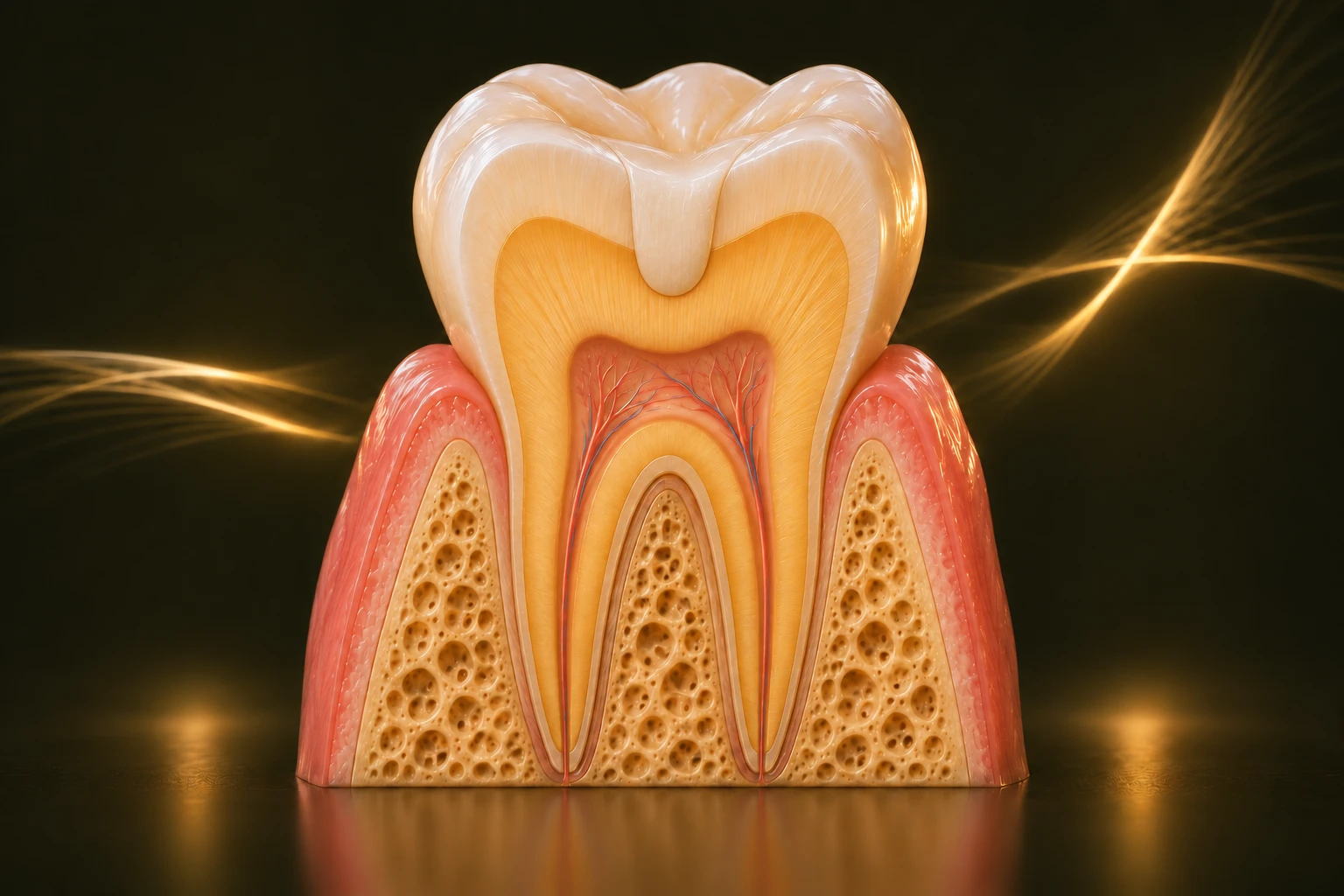
How a filling helps
A filling replaces tooth structure damaged by a cavity. Your dentist treats the decayed area and places a restorative material to help restore the tooth’s shape and function. Local anesthetic is often used for comfort.
The material and treatment depend on the tooth and the extent of damage. A filling repairs the affected area, but new decay can still develop. Keep cleaning your teeth and attending the checkups your dentist recommends.
06 / 06 · Patient Education
Small habits, lasting protection
Prevention works best as a daily routine. Fluoride supports enamel, cleaning removes plaque, and limiting frequent sugary snacks and drinks reduces repeated acid exposure. These habits matter even after a tooth has been treated.
Your dentist can recommend a checkup schedule and assess whether extra fluoride or protective sealants would help. A prevention plan should fit your teeth, your habits, and your individual risk of future decay.
Brush twice daily with fluoride toothpaste.
Clean between your teeth every day.
Limit sugary snacks and drinks between meals.
YOUR NEXT STEP
A conversation. A personal plan.
Decay can be present without pain. A dental examination helps determine what your tooth needs.
Contact the practice →← Patient Education