Bacteria build up.
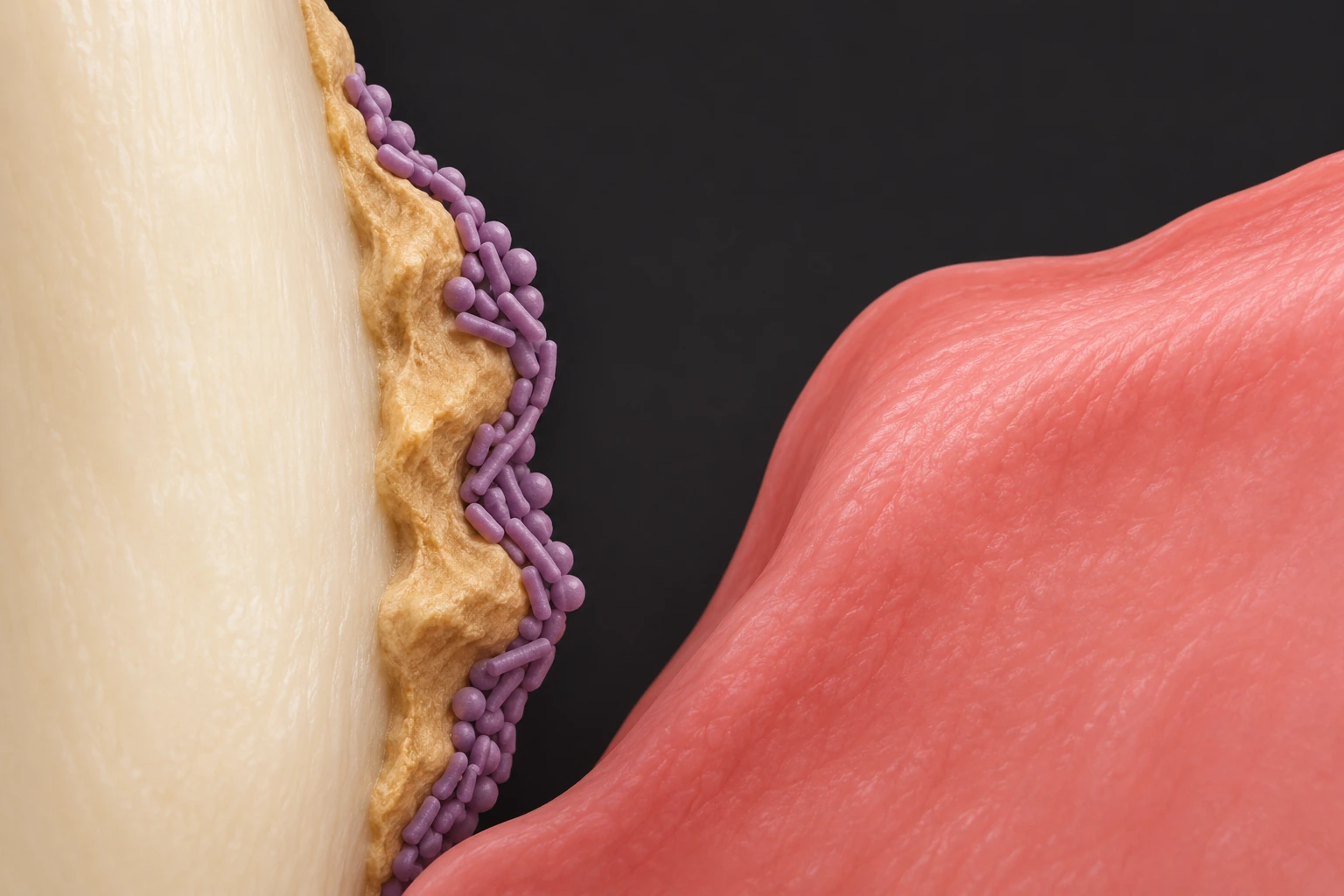
Plaque is a sticky layer of bacteria. It can harden into tartar, a rough surface where more plaque can collect.
REYES PATIENT EDUCATION · Omak
A visual guide to severe gum disease and your treatment options.
Explore the care pathway ↓Severe periodontitis · General education
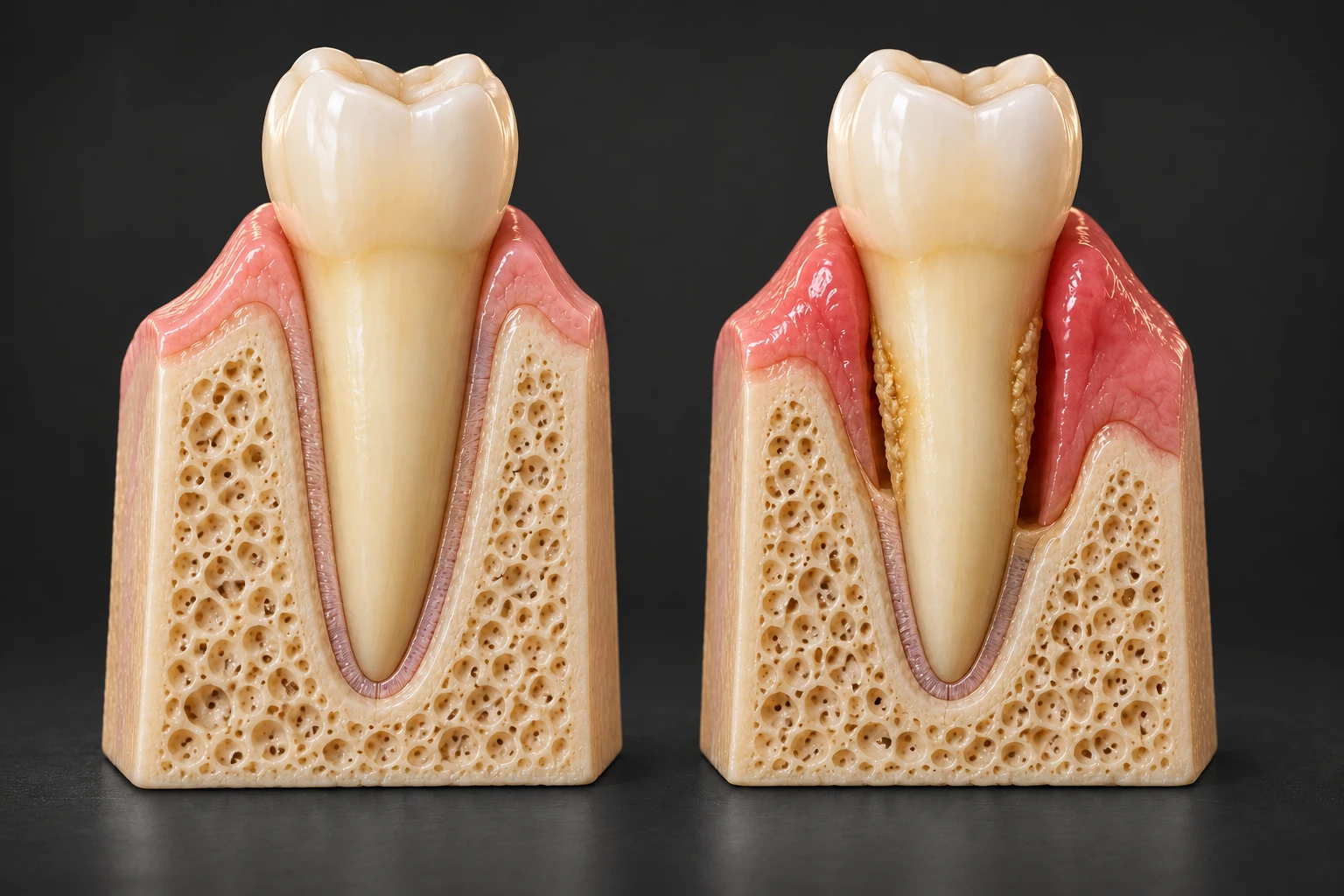
Seven visual steps. Open “+” for more detail. Your examination guides your care.
01 / What happens inside the gums
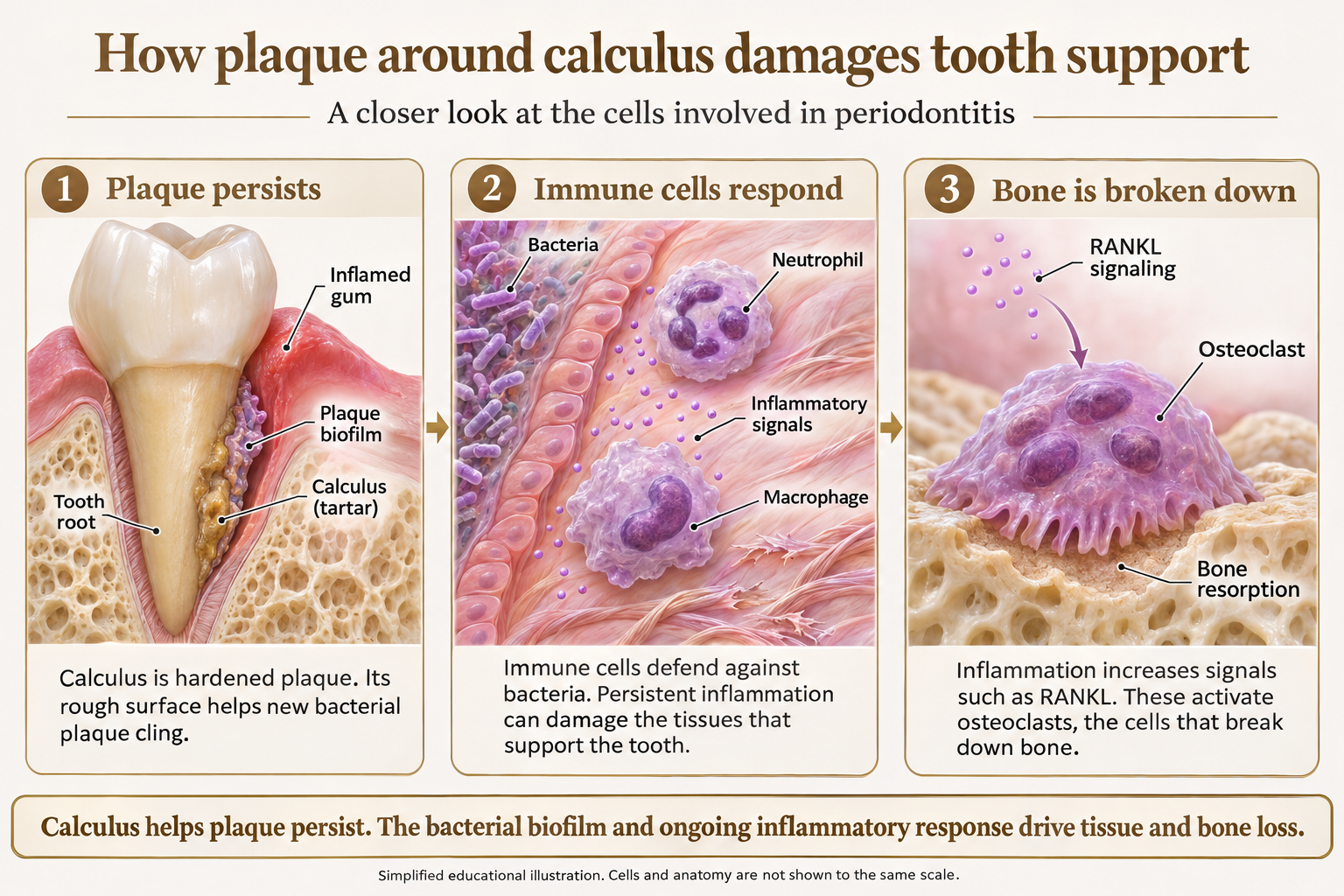
Bacteria start the response. Lasting inflammation can harm the tissues that hold teeth in place.
Plaque is a sticky layer of bacteria. It can harden into tartar, a rough surface where more plaque can collect.
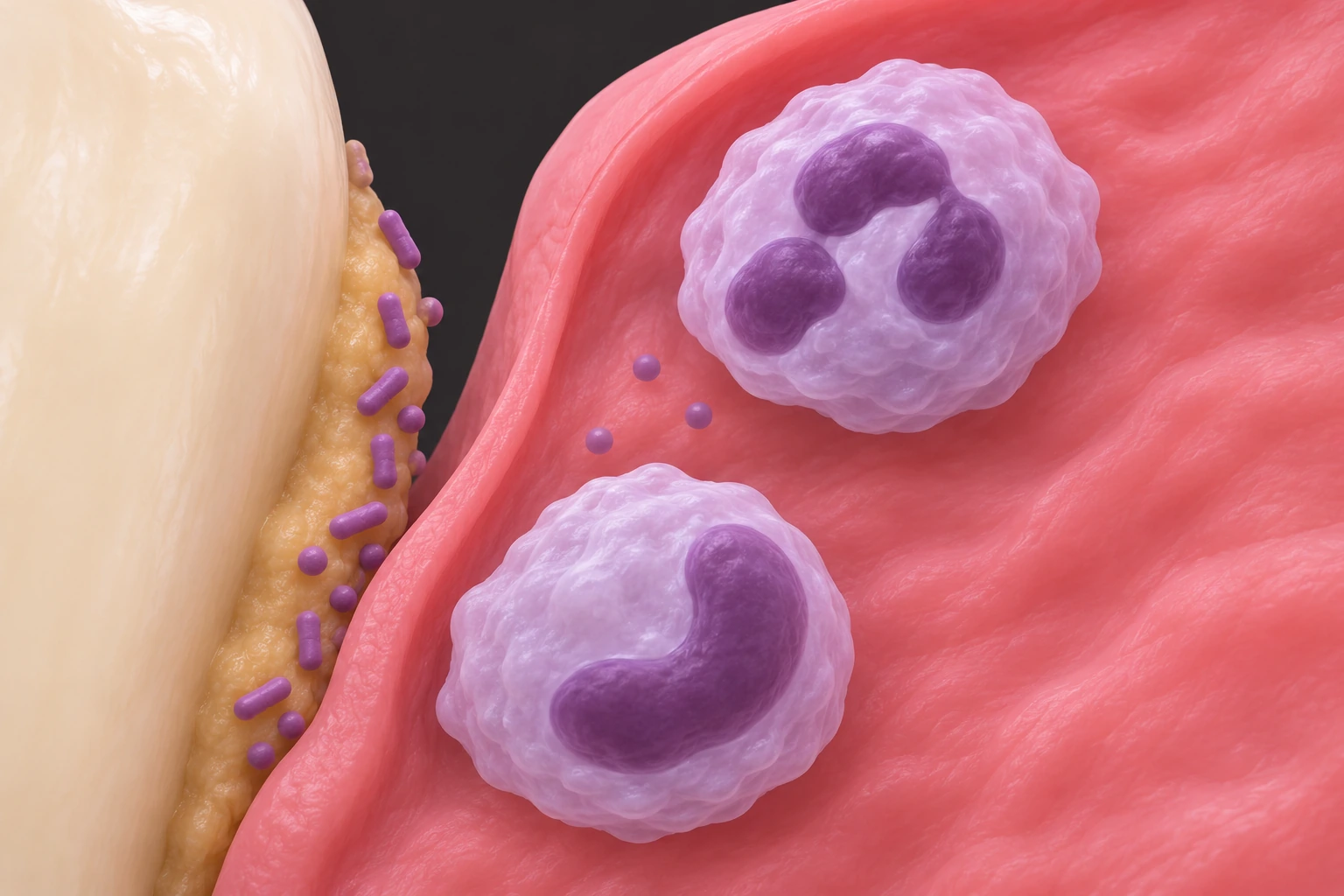
White blood cells arrive to defend the gums. They send tiny chemical messages for help. This response is called inflammation.
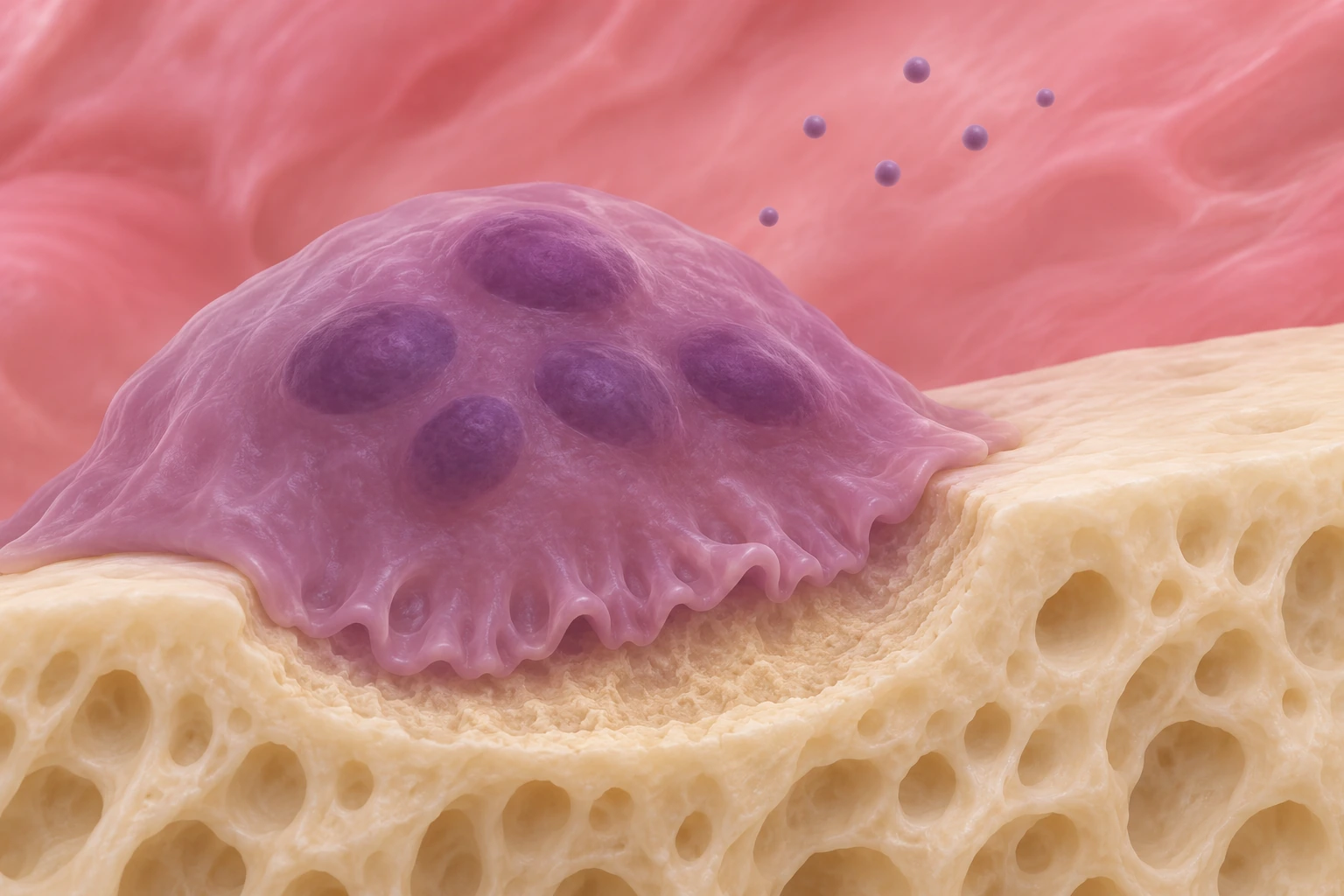
If inflammation keeps going, its signals can make bone-removing cells too active. Bone and other tissues supporting the tooth can be damaged.
Illustrative close-ups, not microscope photographs. Cells, tissues and chemical messages are not to scale.
Inflamed gums may look red or swollen and bleed easily. Damage can also happen with little pain.
Inflammation helps protect you. The problem is when it does not settle. Not every inflamed gum or tartar deposit leads to bone loss.
Treatment can control the disease, but less swelling does not mean lost bone has grown back.
The small dots in the pictures stand for chemical messages. This is a simplified explanation: many cells and signals are involved.
Zhang et al. · Inflammation & bone loss (2024) ↗ADA · Periodontitis ↗
Periodontitis damages the attachment and bone supporting your teeth. Deep pockets can form, and teeth may loosen or move. Severe disease does not automatically mean tooth loss.
Stage III and IV describe severe damage. Stage IV also involves greater tooth loss or complex functional problems. Grade A, B or C estimates progression and considers risk factors. A professional examination determines the diagnosis.
NIDCR · Gum disease ↗AAP · Staging & grading ↗ADA · Periodontitis ↗
NIDCR · Gum disease ↗ADA · Periodontitis ↗Zhang et al. · Inflammation & bone loss (2024) ↗
02 / Diagnosis
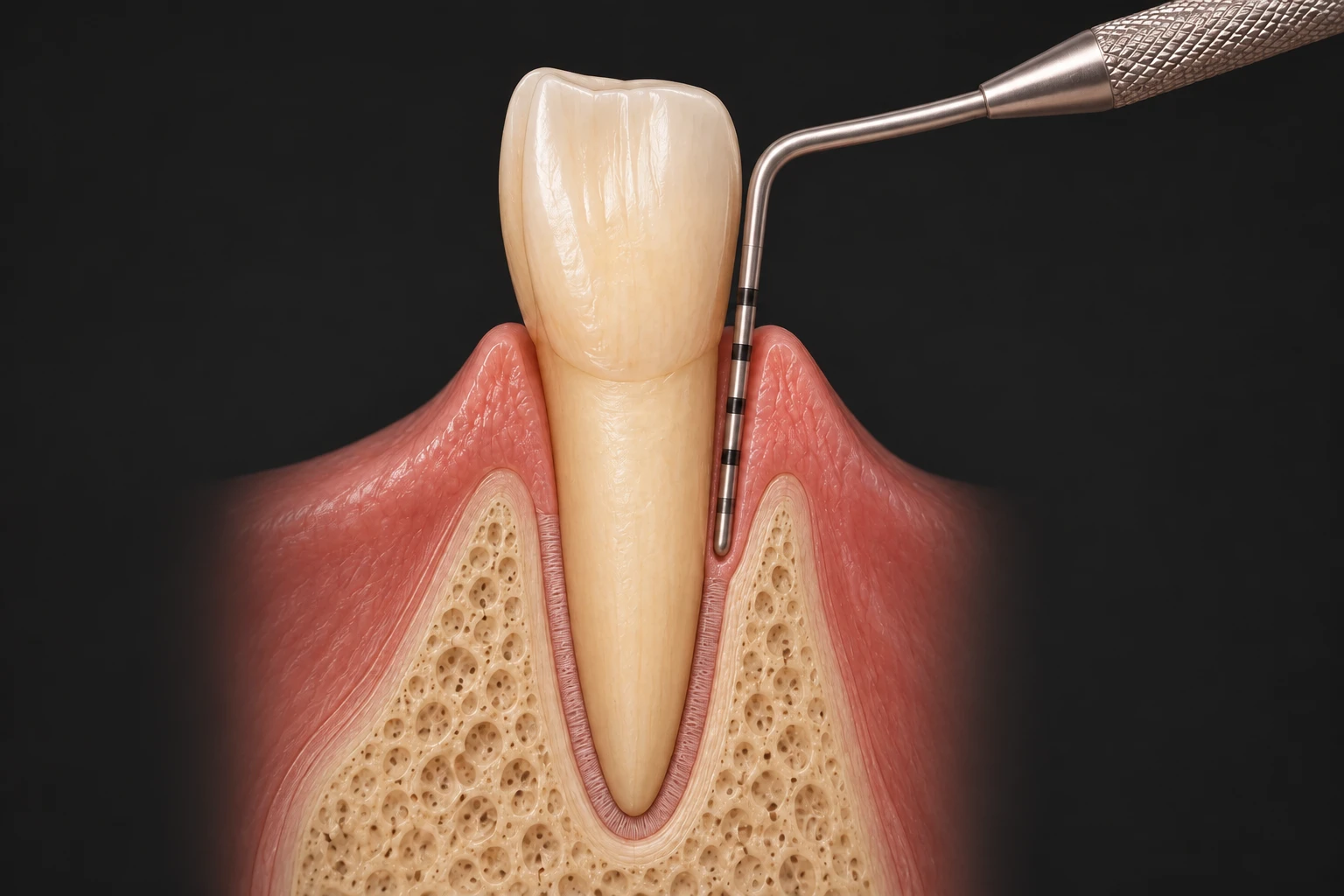
Four views. One individual plan.
Each tooth needs its own assessment.
Your dentist or periodontist combines measurements, bleeding, appropriate X-rays, remaining attachment, tooth stability, bite and your priorities. Pocket depth alone does not determine treatment.
Tobacco, diabetes, medicines and previous treatment matter. Advanced or complex disease may need a periodontist. Ask for a tooth-by-tooth plan.
03 / Initial treatment
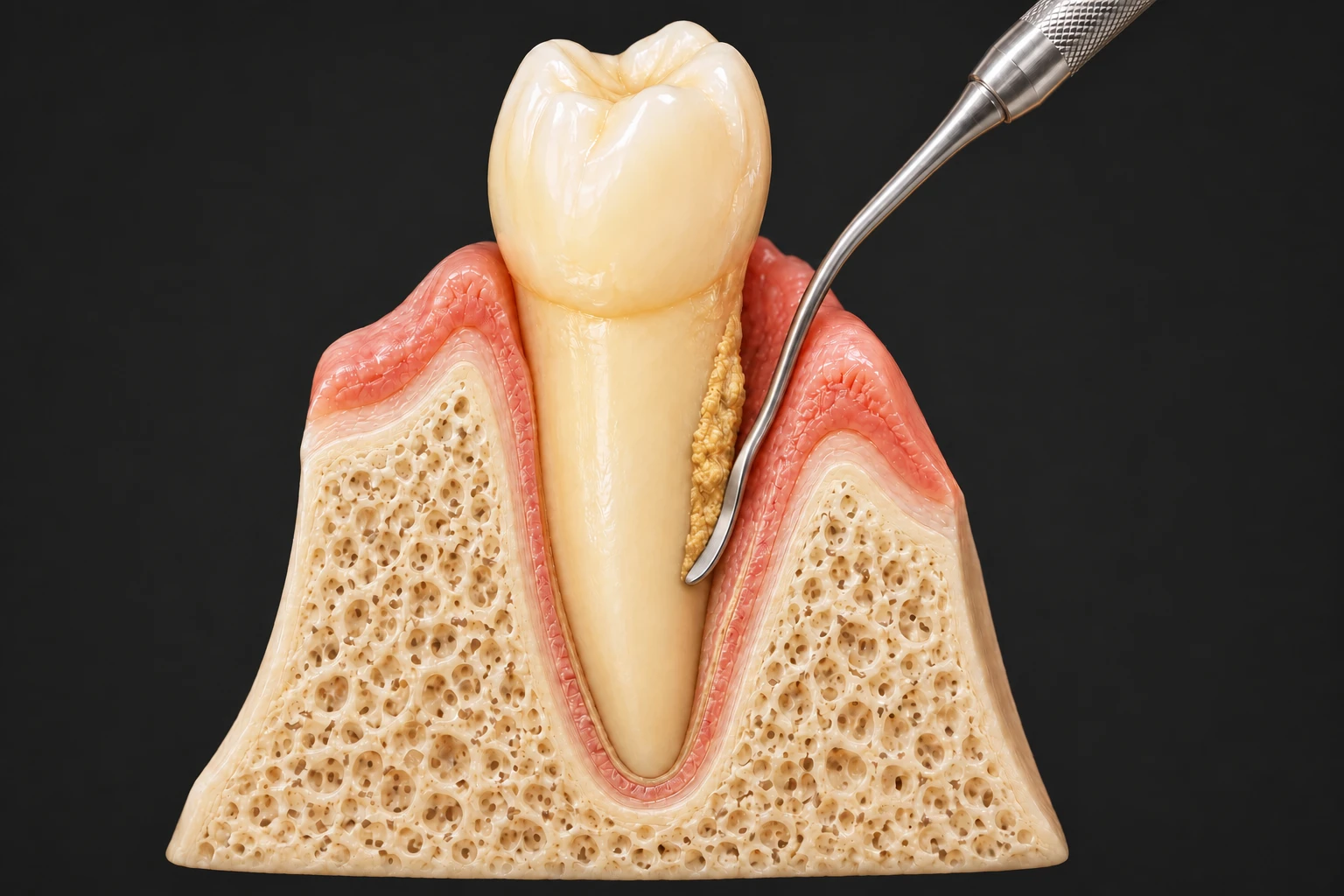
Deep cleaning reaches below the gums. Home care supports the result.
Scaling and root planing removes bacterial plaque and hardened deposits from affected roots below the gumline. Local anesthetic may be used, and more than one visit may be needed. Hand and powered instruments may be used. The picture is not a technique guide or instructions for self-treatment.
Temporary tenderness or sensitivity can occur. As swelling settles, teeth may look longer or spaces more visible. Discuss comfort and medical needs with your team, and follow their instructions.
Daily cleaning, avoiding tobacco and diabetes management when relevant support treatment. Brushing and mouthwash cannot remove deep hardened deposits.
ADA · Scaling & root planing ↗AAP · Nonsurgical care ↗ADA · Periodontitis ↗
04 / Reassessment
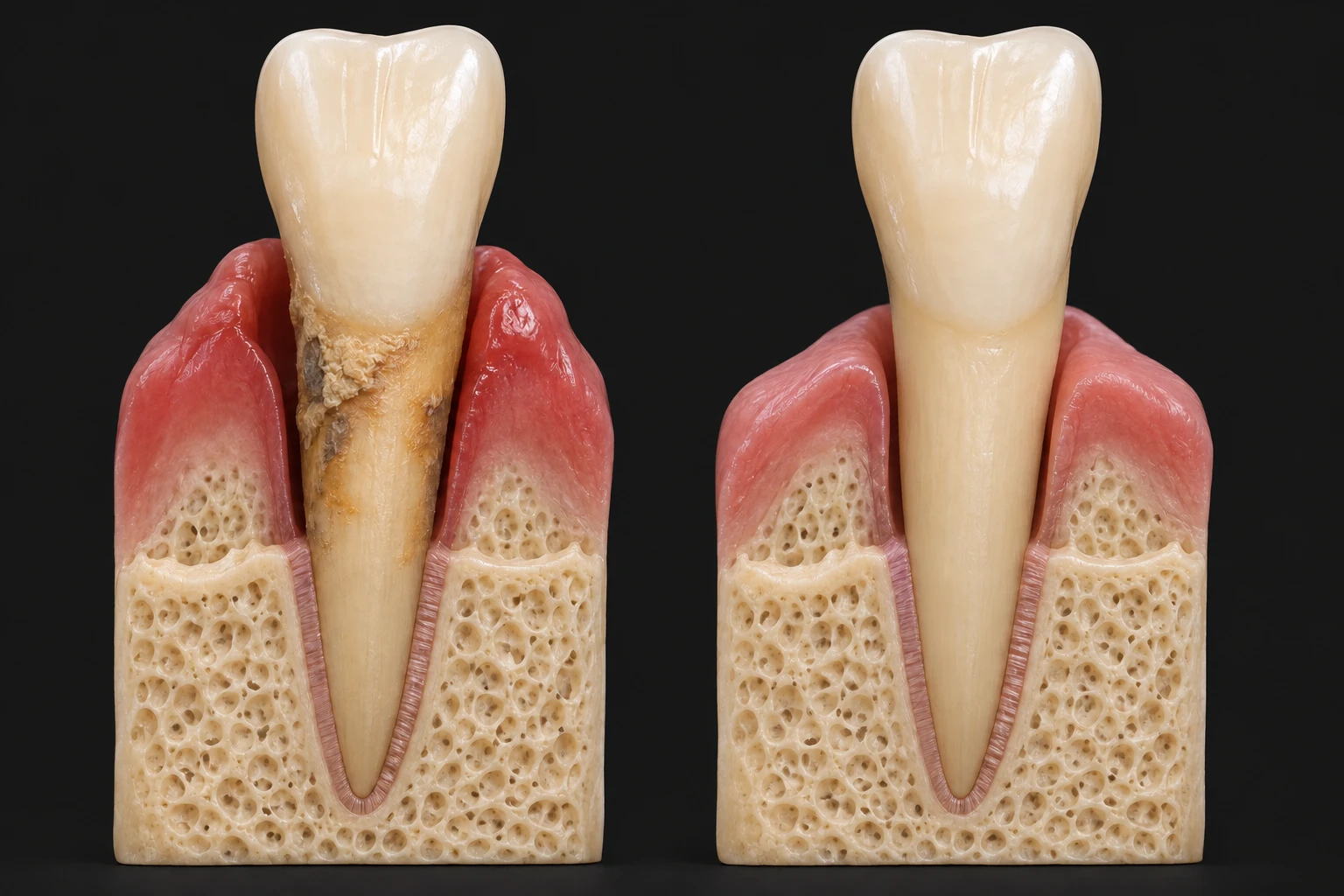
Your team rechecks bleeding, remaining pockets, cleaning access and tooth stability. Different areas may need different care. Feeling better alone does not confirm control.
Persistent pockets or suitable defects may need further cleaning or selected surgery. An uncertain prognosis is not automatically a reason for extraction: compare keeping, monitoring and replacing the tooth.
Infection or another urgent problem may need treatment before the planned reassessment. Routine cleaning does not restore all lost support.
EFP · Stage I–III guideline (2020) ↗EFP · Stage IV guideline (2022) ↗
05 / Selected care
Not everyone needs surgery. Each option has a specific purpose.
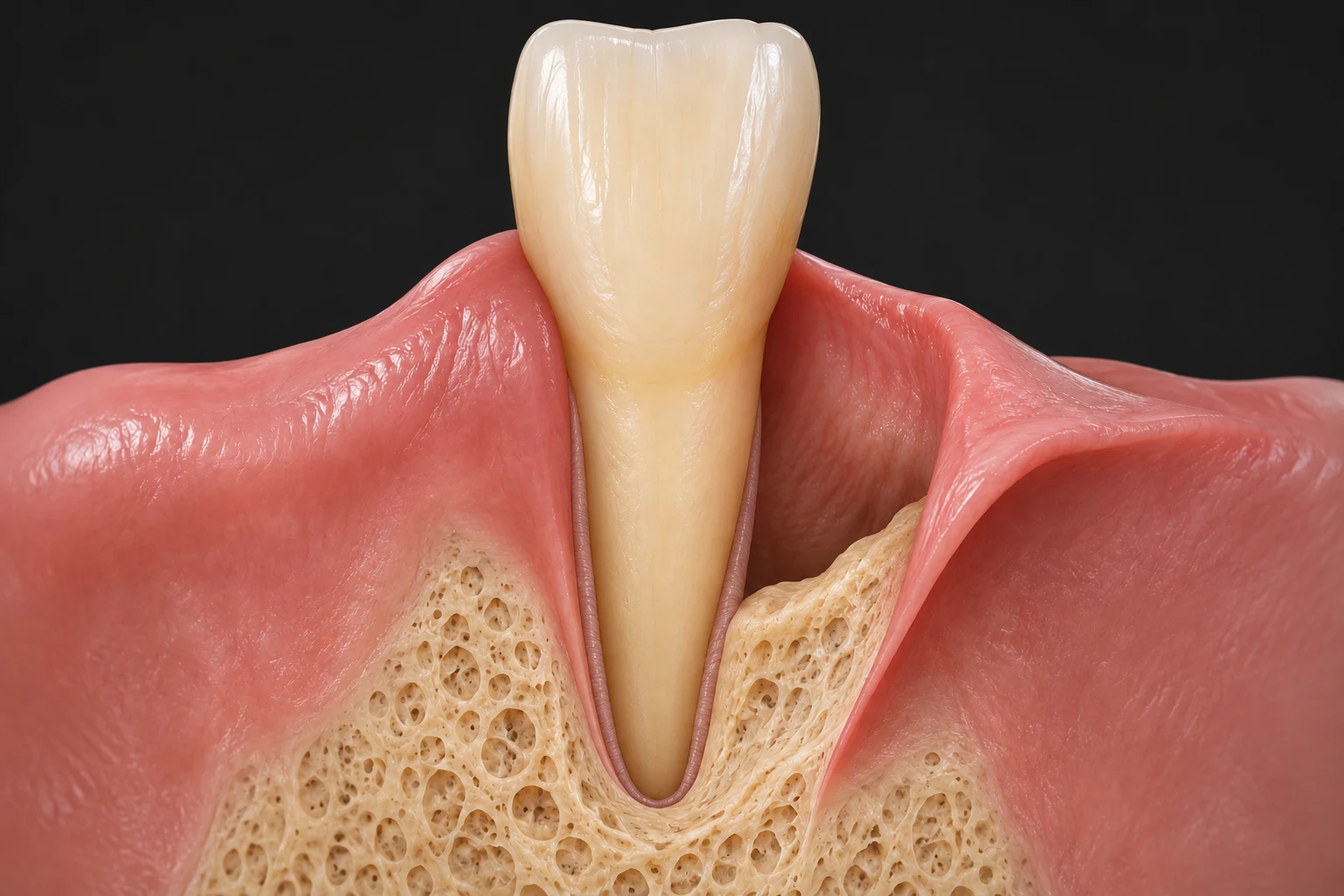
Access for cleaning
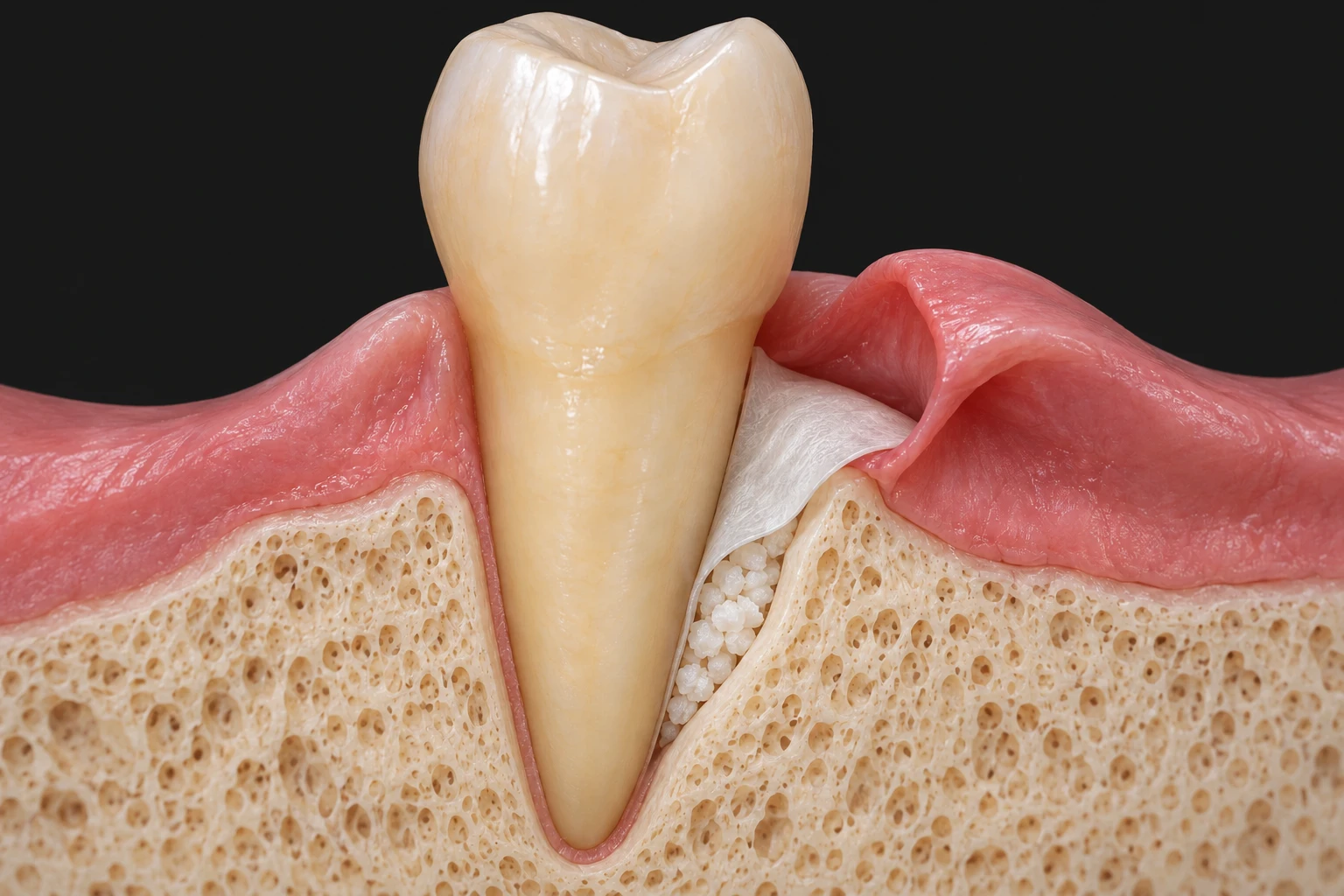
Graft + membrane
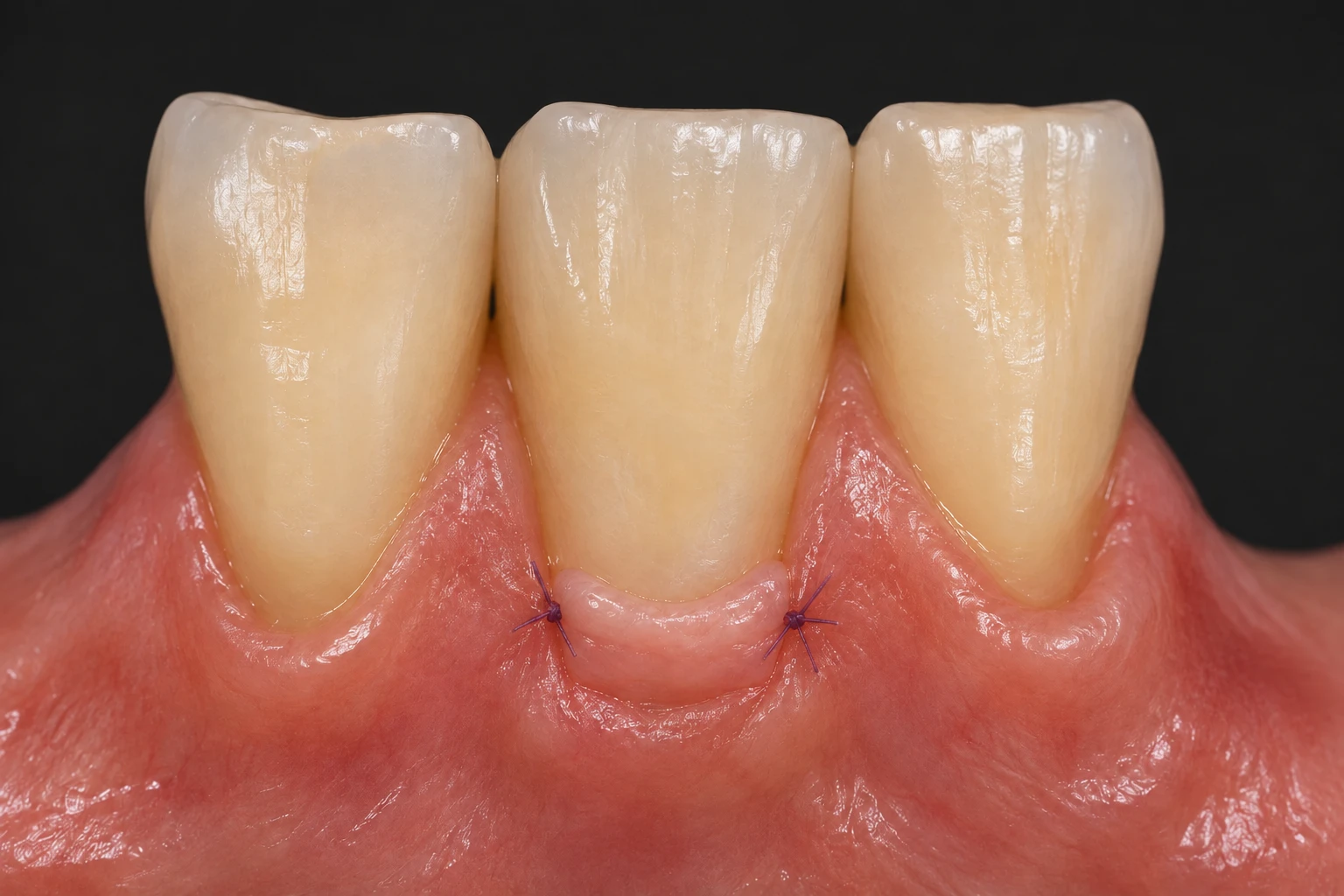
Gum-tissue graft
Access or pocket surgery: tissue may be moved aside to clean difficult areas. Selected bone reshaping may reduce pockets. Discuss recession, sensitivity, healing and expected benefit.
Regeneration: grafts, membranes or other materials may help recover support in suitable defects. They do not restore all bone loss and cannot guarantee regeneration.
Gum grafting: may help selected recession or thin tissue. It differs from rebuilding bone and does not replace disease control.
Antibiotics are for selected situations, not the default; they do not replace cleaning and carry risks. Lasers are not required for everyone and do not guarantee better results or bone regrowth.
AAP · Surgical care ↗EFP · Stage I–III guideline (2020) ↗AAP · Nonsurgical care ↗
06 / Rehabilitation
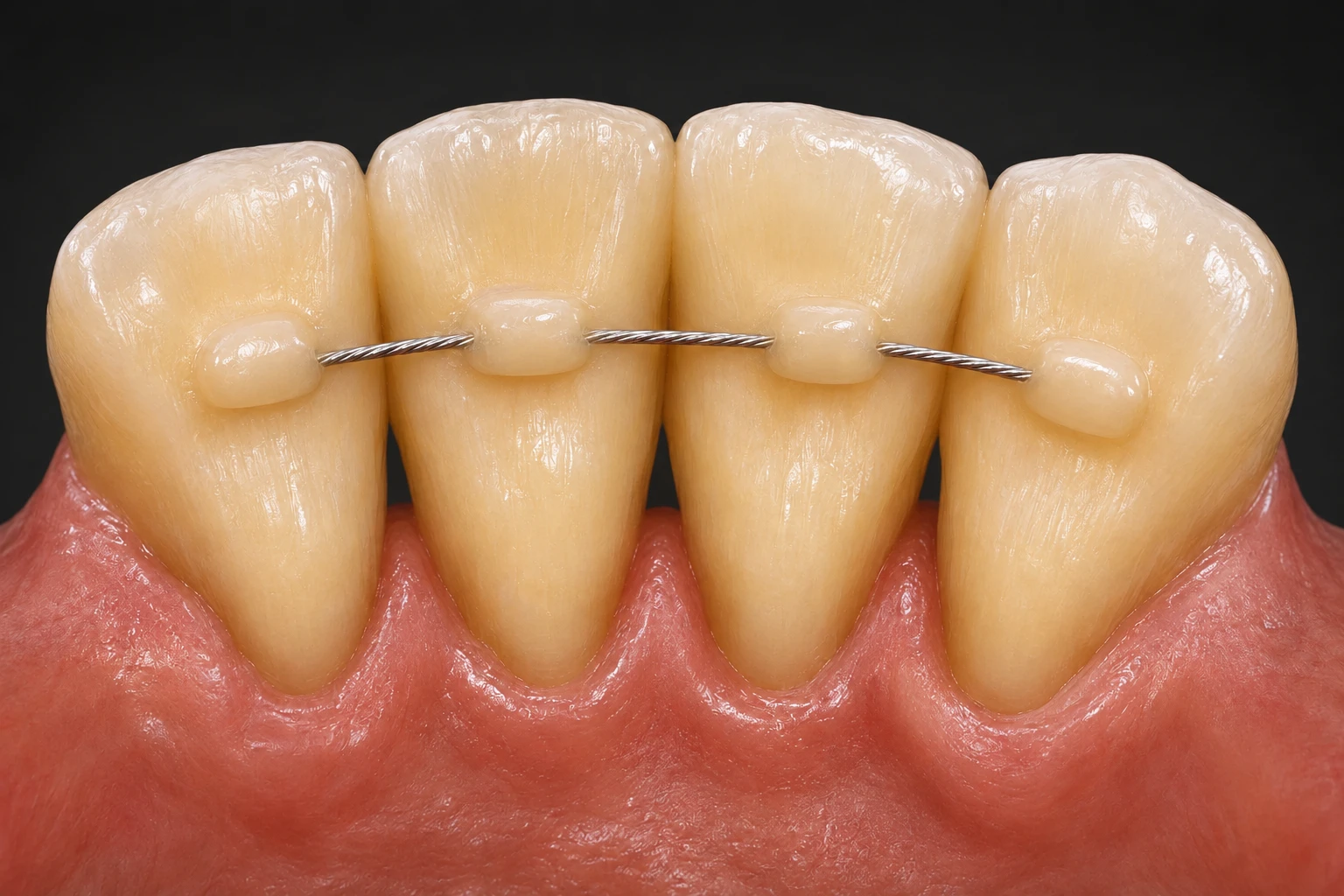
Save maintainable teeth. Replace only what needs replacing.
Plan tooth by tooth and for the whole mouth. Remaining support, anatomy, cleanability, treatment response and other dental problems influence whether a tooth can be kept. A periodontal second opinion may help with difficult choices.
Selected mobile teeth may be splinted for comfort or function. Temporary support may be used early; definitive rehabilitation is timed around disease control. Complex cases can involve restorative or orthodontic care.
If replacement is needed, options may include bridges, removable dentures or suitable implants. Implants are not a cure for gum-disease susceptibility: surrounding tissues can also lose bone. Compare alternatives, costs, timing and ongoing care.
EFP · Stage IV guideline (2022) ↗AAP · Peri-implant disease ↗AAP · Patient questions ↗
07 / Ongoing care
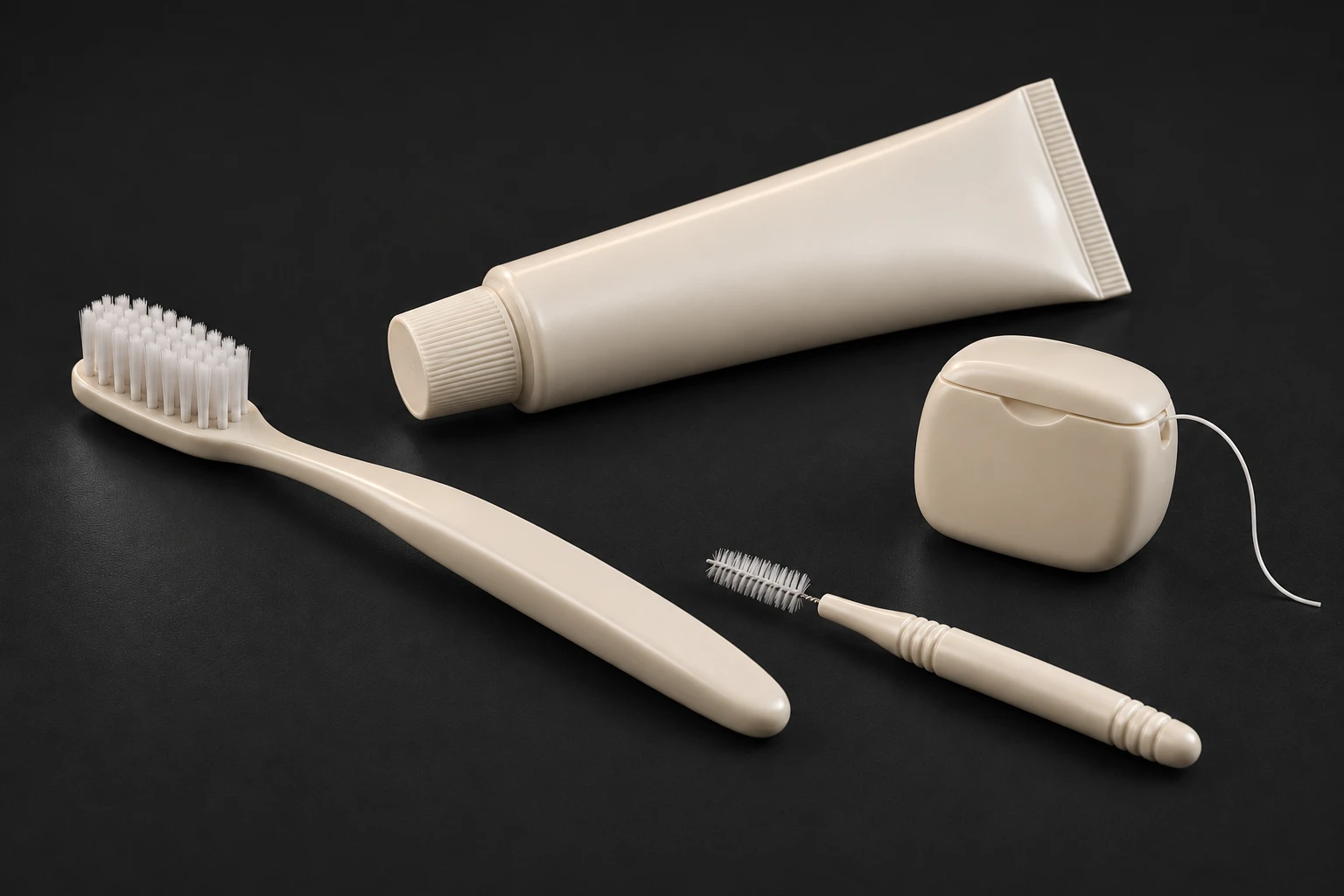
Daily care + professional maintenance.
Periodontitis needs continuing management even when your gums feel well. Avoid tobacco, support diabetes management when relevant and attend maintenance for checking and cleaning at-risk areas.
After severe disease, visits are often closer together, commonly around every 3 months initially. Your clinician adjusts this to your risk and response. Ask which cleaning tools fit your spaces and restorations.
Disease can return. Healing, tooth retention and regeneration cannot be guaranteed. There is no single timeline: ask for a staged plan and which steps are essential now.
NIDCR · Gum disease ↗EFP · Stage I–III guideline (2020) ↗AAP · Patient questions ↗
YOUR NEXT CONVERSATION
Ask for your findings and options to be explained without rushing. The goal is to make decisions that fit your health, needs and priorities.
REYES DENTAL ARTS · Omak
Ask your dental team about your findings and care options.
General education, not a diagnosis or individual care plan. A professional examination is required. Illustrations are not clinical photographs, procedural instructions or predictions of results. No patient data is used. Healing, tooth retention and regeneration cannot be guaranteed.
Sources checked November 10, 2026.